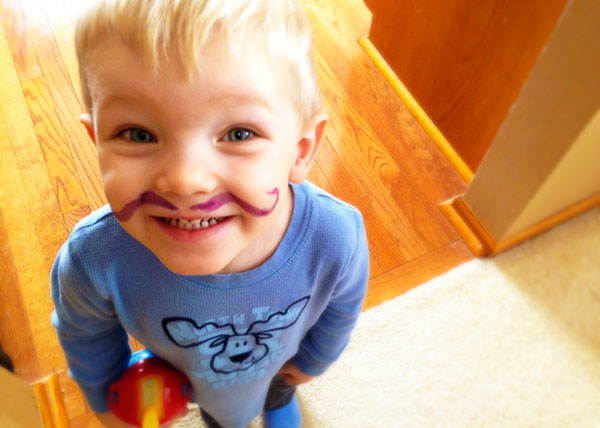
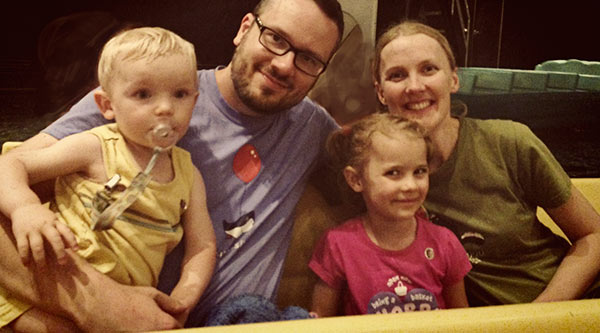
It had been exactly a month since Virginia Rose was born. A good month, to be sure, but also a long one. Weary of the bitter cold weather, our entire family was tired of being cooped up, and the older two kids were passing the time by pushing our buttons. Two-year-old Ben had a streak of purple under his nose, a colorful souvenir from “smelling” the markers we used to keep him quiet. Although we pined for an afternoon at a Florida beach, it was decided that going out to lunch was the best we could hope for today.
As I went to wipe the marker from Ben’s face, Kim made some comment about him looking a bit like Hitler. Then she said, “I wish we could just draw mustaches on our kids, wouldn’t that be awesome?”
“It would be,” I agreed.
“Why don’t we?” she asked.
I could tell by her tone that she was kind of serious. And so I paused to ponder a serious response.
“Because of what other people might think,” I answered.
Before I even finished the sentence, I knew what I had to do.
“Give me that purple marker,” I said. After glancing to confirm it was the washable variety, I removed the cap and called Ben over. Then I drew a bold and curly mustache on my son. Although he cooperated, it’s fair to say he had no idea what I was doing.
“Ok.” I proclaimed. “NOW, let’s go to lunch.
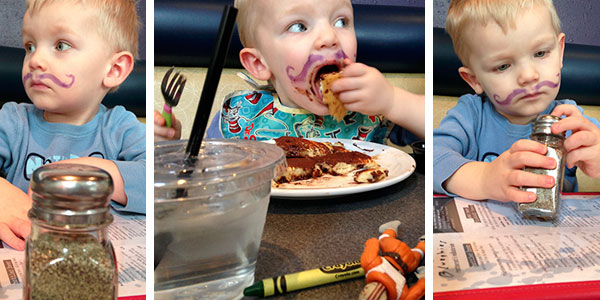
And we did, with our purple mustachioed son in tow.
It did garner some attention. No calls from DCFS, as Adultitis had warned. Instead, the people who noticed universally responded with smiles of delight at my oblivious son, who looked like a tiny ringleader in a circus sponsored by Willy Wonka. And it was awesome.
Here’s a tip: If you are faced with an opportunity to do something, and the only reason you don’t is because of what someone else might think, you can be certain that Adultitis is up to no good. If you are serious about winning this war, and you are desirous of living an amazing story, you must do that very thing, without hesitation. You must.
Family with spring fever and three kids, five and under: 1, Adultitis: 0.
Share a time when YOU did something fun without regard to what other people might think. Leave a comment below!
I’ll admit it: I prefer a tidy house. I feel good when the dishes are done and the counter is cleared. I’m easily disturbed when piles stay piles for too long. I like the structure of a good plan.
Is it an Adultitis-fueled trait? Perhaps. But I do find that I am more present, relaxed, and creative when clutter and chaos are minimized. In general, I don’t think it’s a terrible trait to have. And I don’t believe that an Adultitis-free life disregards any sense of order.
However. I do find it helpful to regularly remind myself of some simple truths:
Sometimes budgets get blown and well-made plans go poof.
Sometimes grass stains are inevitable, and torn jeans are unavoidable.
Sometimes eggs get broken, milk gets spilled, and the kitchen gets dusted in a fine layer of flour.
The most direct route is rarely the most scenic, and sometimes wrong turns can lead to the best discoveries.
Sometimes a scaled-down replica of the Wisconsin State Fair takes over an entire bedroom for several days.
Sometimes life doesn’t go the way we planned, expected, or even hoped.
Adventures are rarely tidy.
Sometimes the best memories arise from the biggest messes.
How about you? What’s your favorite “messy” memory?
As of this writing, Kim is pregnant with our third child. The news came as a bit of a surprise. Not a shock, mind you, as we are well aware of how babies are made. (Pretty sure, at least.)
The fact is that although we were open to another child, we weren’t exactly planning on it. We had been getting used to the story of our family having just two kids.
When Kim first told me the news, I may or may not have cursed. Not in an angry way, but more in a “you’ve got to be kidding me” way.
I immediately propelled into logistics mode: We’d just purchased a new car — would it fit three car seats? Would Ben be old enough to move in with Lucy and handle a big boy bed by the time the baby came? I was so wrapped up in thinking about how this new houseguest would negatively affect our family dynamic, travel habits, business plan, and pocketbook that I couldn’t think of much else, let alone experience any real excitement.
Fast forward to earlier this month, and Kim and I attended the World Domination Summit in Portland. Not only were we looking forward to some time alone together, but we were also anticipating the new ideas we’d be exposed to as a result of being around so many big thinkers. WDS has become an annual pilgrimage to seek out and uncover our next big thing, particularly in our business.
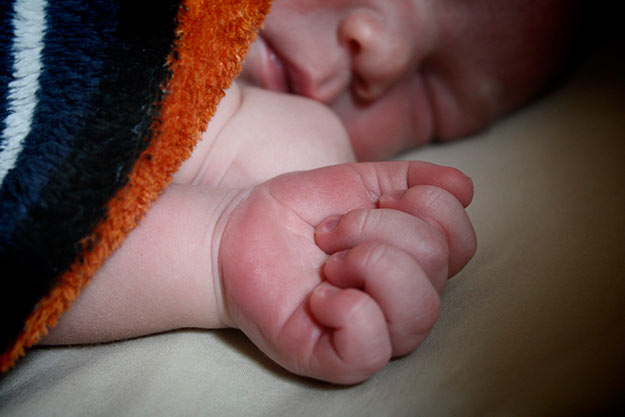
On the first full day, digital photography expert and professional blogger Darren Rowse was talking about the power of dreams. During his presentation, he showed an image of a newborn, probably less than an hour old. The baby was tiny and wrinkly, flexing his displeasure at the tape measure encircling his head.
The caption on the slide read: The next big thing might be the small thing in front of you.
Suddenly, my eyes appeared to malfunction, as a steady stream of liquid began escaping from my eyes. (I’m glad the theater was dark.) Here I was in Portland, eagerly looking for the next big thing in my life, when reality slapped me across the face with a rubber glove: The next big thing was already here! We were having a baby! And it was going to change my life in a million wonderful ways!
In mere moments, my shame for feeling so lackluster gave way to a new perspective and enthusiasm. Deep down, I felt a sense of relief. I didn’t suddenly receive all the answers I’d been looking for, but I did receive the peace that we’d be ok. Yes, things would be different, but they would also be awesome.
I am finally ready to embrace this new adventure with joy and excitement.
I probably should have felt thrilled about bringing new life into this world from the first moment I learned the news. But the truth is, I wasn’t.
I suspect that is often the case any time our story changes in a way we didn’t anticipate, even if that change is mostly a good one. Our stories are bursting with opportunities for adventure. I’m slowly learning that the biggest among them might be hidden within the circumstances clothed in uncertainty.
Has your story just taken a surprising turn? The next big thing might very well be the small thing right in front of you.
When it comes to fashion, I’m pretty plain. My daily uniform is usually jeans and a t-shirt. When I speak, I gussy up the jeans and t-shirt with a sports coat. Throughout my entire life, my shoes have typically been one color (black or white) with no more than one accent color. To me, fashion is all about two things: comfort and not looking like an idiot. Since I’ll never be mistaken as a New York City fashionista, the “looking like an idiot” part is avoided by keeping things plain and simple.
And then I started thinking about getting red shoes.
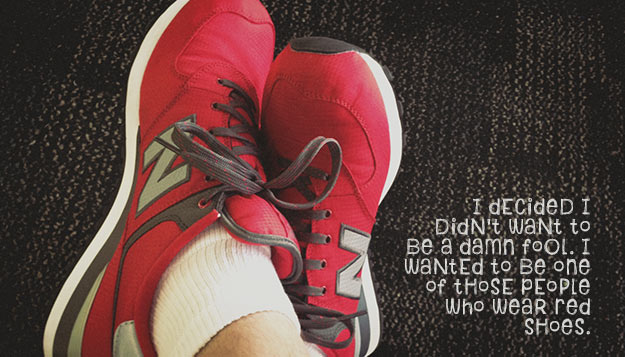
A few months ago, I found myself in the market for new sneakers. Every once in a while, I would notice someone wearing red shoes. I’m talking ALL red, not white or black with a tiny splash of red. They’re hard to miss, those Red Shoe People. I always thought to myself, “Man, I wish I could pull those off.” Those Red Shoe People always seemed so fun and confident and free. Eventually, the wish became stronger and the whispers became louder.
“Why can’t I pull them off?” I began asking myself. “Why can’t I wear red shoes?”
The answers I told myself were variations of the same theme:
They won’t match anything.
You’ll look ridiculous.
People will notice you more. And not in a good way.
Who do you think you are? A celebrity? The only people who can pull crazy stuff like that are celebrities.
Face it, you’re just not one of those Red Shoe People.
Eventually, these so-called reasons really started to get to me. I spent A LOT of time mulling it over in my head. It became clear that this was about more than shoes. Ultimately, I had only one person to convince — myself.
Believe me, it was not lost on me how silly it was to agonize over shoes. Freaking shoes, man. This was NOT a life or death decision. And the biggest reason for not pulling the trigger? Worrying about what other people might think of me. Bottom line, that was it. Eventually, I concluded, “They’re shoes. Who cares what other people think? If you’d enjoy wearing them and the only reason you don’t is for fear of what other people might think, you’re a damn fool.”
I decided I didn’t want to be a damn fool. I wanted to be one of those people who wear red shoes.
And so I ordered a pair of red New Balance shoes from Zappos. Knowing they had a generous return policy, I was going to get a more “conservative” pair, just in case I really couldn’t pull off the red shoes and needed to send them back. As it turned out, they didn’t have the fallback pair in my size, so I just ordered the red.
And you know what?
I love them. They are probably my favorite pair of shoes I’ve ever worn in my entire life. I love how they make me feel. Not just because they make me feel fun and confident and free, although they do, in spades. They make me feel like a guy who decided it didn’t matter what other people think. And that’s where the fun and confidence and freedom come from. My soul smiles every time I tie the laces.
The moral here has nothing to do with whether you wear red shoes or not. Maybe you are already a Red Shoe Person, and you read this post thinking, “Jeez, dude, get the red shoes already. It’s not that big a deal.” Or maybe you’re someone who has no interest whatsoever in owning a pair of red shoes. Regardless of what camp you find yourself in, there is probably something in your life you’ve always (probably secretly) wanted to own, do, or be that you’ve talked yourself out of. You’ve sold yourself on the idea that you’re just not “that type of person.”
Here’s the deal: You ARE that type of person if you WANT to be. Simple as that. Life’s too short to worry about what other people think.
A neat footnote to this story (hey! a pun!) is that the very first day I wore these shoes in public, I was at a restaurant. When the waitress came to our table, she enthusiastically remarked, “I love your shoes!”
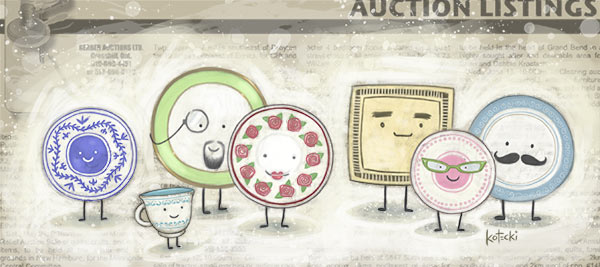
Yep, plates tell stories. Especially fancy plates.
A few months ago, a woman came up to me after one of my speaking programs to talk about her experience cleaning out her mother’s home after her passing. The woman and her siblings found a box of fine china, each piece carefully wrapped just as it was when it was gifted to their parents on their wedding day. The mother was married for over fifty years. She had four kids. Thirteen grandkids. And the china was still in the box, unused.
Although muffled by cardboard and packing paper, these plates told a clear story: There is no occasion special enough to risk chipping or breaking a plate.
Of course, that’s the main reason our fine china is so underused, isn’t it? We can’t bear the thought of breaking a plate and ruining the set. Naturally, the only way to prevent that is by keeping them buried in the box they came in. Forever. Or sentence them in some sort of wood and glass display case, where you can at least lovingly look upon them NOT being used.
That’s one story. Another one goes like this, and it was shared with me by a lady I met in Salt Lake City. She said that her mother always used the good china for Sunday dinners and every holiday. Naturally, a plate or a teacup got broken here and there. But instead of lamenting over the loss, she would pick up something to replace it the next time she was at a thrift or antique store, unconcerned whether it matched her current set or not. Over the years, the original set evolved into a magnificently mismatched collection of eclectic dinnerware. Each plate, each saucer, each bowl told a different story. Not only the mysterious story of its original owner and unique history, but together they told a collective story with one unmistakable moral: Life is meant to be lived and worthy of celebration.
I don’t know about you, but I like that story better.
Kim and I attended our first homeschooling conference this past weekend. With a December birthday, Lucy wouldn’t be entering kindergarten for another year and a half, but we wanted to get more information about this life-changing decision we’d been considering. To be honest, we each felt a little uncertain and overwhelmed at the prospect of going all-in.
Although homeschooling is quickly growing in popularity (about 2 million kids aged 5-17 are homeschooled in the U.S., twice as many as in 1999), it’s still not the norm. There’s a lot of misinformation out here, and many people still think that homeschooled kids are socially awkward recluses, and unable to compete academically with their public school counterparts. The truth is that most homeschooled kids are extremely self-confident, well-adjusted, and academically bright, often scoring better on standardized tests than their public-schooled peers. In fact, many colleges are creating special scholarships just for homeschooled kids because they are such an asset to the school.
And yet, homeschooling still raises eyebrows.
Meanwhile, I do a lot of speaking in the education market, and it feels sort of strange to speak to public school teachers and then reveal that I actually homeschool my kids. But the truth is, it’s never been the teachers Kim and I have had a problem with (she was one herself for half a decade). They are some of the biggest-hearted, hardest-working people on the planet, in my opinion. Rather, it’s the system, the bureaucracy, and the one-size-fits-all approach that has caused us to consider homeschooling.
Now, we’re used to doing things differently from others. We call it opting out. It’s part of the whole escape adulthood thing, and we champion breaking rules that don’t exist. But still, everything we do is with mindful intention, not for shock value or for being different for different’s sake. Homeschooling is a viable option for the education of our children, an option that wasn’t as commonplace a generation ago. And so even though it’s nowhere near mainstream, we felt it was well worth considering.
Interestingly, I arrived early for a session about incorporating the kitchen into your curriculum, and I ended up chatting with the woman giving the workshop. I told her that since my daughter was not even five, we hadn’t yet started homeschooling, and she gently reminded me, “You’ve actually been homeschooling this whole time.”
So true.
One of the highlights was attending the graduation ceremony on Saturday. Six high school seniors were honored as they officially ended their homeschool education. Each gave a short speech, followed by an opportunity for the parents to say a few words. It was a moving occasion. As I sat there, I marveled at the poise and confidence these six young men and women displayed as they shared their experience and appreciation for having been homeschooled. I was awed at the respect and love they had for their parents. I was impressed by the things they’d been able to accomplish and the dreams they outlined for their future. Then I thought back to my own high school graduating class of 300 kids. I figured there would be fewer than 10 that could have been put in a similar situation and responded with as much grace and wit and wisdom. A vast majority of them would have been in Metallica t-shirts shouting something barely intelligible, like, “School sucks, I’m outta here!”
Time and again, I was blown away by the accomplishments proud parents shared about their homeschooled adult children. Master’s degrees from prestigious universities. Great jobs in the field of engineering, physics, and business. Volunteer and ministry experiences that made me feel like Ebeneezer Scrooge. Not only have they become successful, but they are among the best our society has to offer.
Kim and I gained a lot of perspective and ideas, but no one there ever pushed the “right way” to homeschool. We discovered that there really are as many ways to homeschool as there are homeschooling families. Everyone has a different personality, which is cool. I think the lack of judgment comes from having to constantly answer critics and fight for their rights as parents. The prevailing sentiment seems to be, “I don’t want anyone telling me what’s best for my family, so I won’t tell you what’s best for yours.” As someone who lives in a pretty politically charged state, it was cool to see a mix of families — conservative and liberal, Christian and non-religious, big families and one-child families — unified as one voice, eager to give support and share tips with one another. Just amazing.
Going into the weekend, my prayer was that if homeschooling wasn’t for us, we’d be willing to walk away. But if it was, I prayed for confidence and enthusiasm.
I come away with both in spades.
We now see that although homeschooling is not right for everyone, it is for us. We are excited about the freedom and possibilities before us. Yes, there is more responsibility that comes with this choice, but we have come to see that it is a choice that offers more fun, and, believe it or not, less stress.
In no particular order, here are some of our favorite things about homeschooling:
The Hope for a Brighter Future for Our Kids We believe that for our children’s futures, success will require the ability to think creatively, easily adapt to change, and find answers on one’s own. Homeschooling excels at this. Regular school is broken, based on an outdated model born out of the Industrial Revolution. It’s also bogged down in bureaucracy and slow to change. Kim and I see homeschooling as our chance to BE the much-needed change for our kids, rather than hope and wait for things to get better.
Creativity and Control We’ll have more control over what our kids learn than some politician, administrator, or school board. We can customize our kids’ education based on their specific needs and interests. Contrary to the way a normal school day flows, learning does not happen in clearly delineated blocks of time and topic areas (i.e., science THEN math THEN history). In reality, everything is connected! An interest in horses may involve science AND math AND history AND literature AND art AND music — all at once! Kim and I get to guide our children’s learning in a way that is relevant and meaningful to their lives.
Freedom to Grow I love the idea of being able to give my kids freedom to follow their passions and pursue their interests fearlessly and confidently. Learning will happen at their own pace, not at the one-size-fits-all standard. They’ll be neither bored waiting for everyone else to catch up, nor left behind and at risk of being labeled slow or stupid. And there is no sound of a bell telling them that they have to be done with an activity they’re really into.
Freedom of Schedule We are stoked at the prospect of being free from the standard school schedule, which will give us a more flexible daily and weekly schedule. It also means no painfully early mornings, no parent-teacher conferences, no homework at night, and no restrictions on when we take a vacation! In traditional schooling, there is a lot of wasted time on busywork and adminstrivia, so I appreciate the more efficient use of time in general.
Freedom of Place Homeschooling can happen anywhere. You can do school inside at the kitchen table, outside in the grass, or in a fort made of couch cushions and blankets. And we can continue to be heavy travelers, learning on the road wherever we go.
More Family Time This is huge: I get to see more of my kids as they grow up. The years go fast enough; I can’t imagine how much faster they’d go if they were somewhere else being taught by someone else. Plus, they get to spend more time with their siblings, creating closer relationships. Although it seems unthinkable for more time together to be a GOOD thing, the homeschooled siblings I’ve encountered all get along really well and actually enjoy being together. Who knew?
Socialization Socialization is usually looked at the the main disadvantage of homeschooling. But we see it as one of the biggest advantages. First, in terms of time spent together, Kim and I are the primary role models, not their peers. It is OUR faith and values that will be the dominant force in their life. Secondly, my kids will be less peer dependent, making them less susceptible to negative peer pressure. But, contrary to popular belief, homeschoolers are not locked inside all day long, away from the outside world. Instead, they have the freedom to go on more field trips, do more volunteering, and gain more experience working with people of all ages, which is better training for the real world. And with a large homeschooling network in our community, our kids will be able to connect with good friends their own age, who aren’t concerned with what’s currently popular at school.
Lifelong Learning The most exciting thing of all is the chance to cultivate curiosity and foster a lifelong love for learning in our children. Too many schools churn out unengaged, rule-following robots who think learning is boring. Consider these sad facts:
58% of the US adult population never reads another book after high school.
42% of college graduates never read another book.
80% of US families did not buy or read a book last year.
70% of US adults have not been in a bookstore in the last five years.
One workshop leader, when asked about whether or not his family takes summers off, replied, “Why would we take summers off from learning? We just keep on reading books and learning about stuff that excites us. When you make learning enjoyable, schooling IS the vacation.”
Wow.
I was also struck by another woman who said, “Our kids are all grown now, so now we get to homeschool ourselves.”
Double wow.
No doubt, homeschooling will be a challenge. But then again, all worthwhile things are. Kim and I are looking forward to sharing in the learning and doing new things WITH our kids, while taking advantage of the opportunity to turn everyday events into adventures!
You can be sure that we will share many of our adventures here. 🙂
* [ Update: The Downsides of Homeschooling? ] *
I was asked to share some of the downsides of homeschooling to help those who might be considering it themselves. While we’re still in the rookie stage of this whole thing, I am happy to share some of those that we are aware of and have even considered ourselves. I also apparently felt that this post wasn’t long enough as it was, so here goes:
Time. It would appear that one of the downsides of homeschooling is the extra time involved. Interestingly, it is not necessarily the amount of instruction time required, however. In fact, I heard one veteran assure a working mother that nights and weekends are sufficient for covering what’s necessary, because the education is so customized and you don’t have all the administrivia that comes when you’re managing 25 bodies. But make no mistake, there is a lot of thinking (and effort) involved, which takes a lot of time. There are many different curricula and approaches to consider, and every stage of your child’s life will bring new challenges to sort out. It’s interesting to keep in mind that no one else is going to put anywhere near this amount of time and consideration into my child’s educational journey. Kim and I think our kids are worth it, and we figure that if our kids went to a traditional school, we’d be spending a lot of time helping them with homework and getting them to and from school every day.
Money. Public school is free. Private school is not. Homeschooling seems to be somewhere in the middle. It’s true that some of the curricula can be expensive, but the best resource is the free public library, and there are many books and websites devoted to homeschooling on a shoestring budget.
Keeping Records and Jumping Through Hoops. Every state has different legislation and requirements regarding homeschooling, and some have some pretty stringent reporting policies, which can be a real pain. I can’t speak to all of them, but we discovered this weekend that Wisconsin is one of the most homeschool-friendly states around. For that, we are extremely grateful.
Missing Out on High School Sports and Things Like Prom. Many states require school attendance to participate in high school sports. That kind of stinks, especially since Kim played volleyball in high school and I played varsity baseball. However, some homeschool networks have their own leagues, and of course, there are public summer leagues available as well. We also heard that a lot of homeschoolers participate in sports that can be enjoyed throughout their entire lives, including activities like golf, karate, skiing, and rowing. On the topic of prom and other similar large social activities, yes, these are things that are hard to replicate in a homeschool setting. I think the loss of these experiences takes on more significance because most people don’t have a reference for the types of things homeschoolers get to experience that traditionally-schooled things don’t. Yes, our kids may miss out on some things that their peers enjoy, but we feel like the benefits they’ll receive will be far more valuable.
Having To Teach Things You’re Not That Good At. I scored well on my ACT, but these days, I barely remember algebra, let alone trigonometry! And how can I possibly teach chemistry as well as Mr. Navin, who has spent his whole life in the field? That was probably my biggest fear going into this weekend. Sure, I can get my kids up to speed through middle school, but after that, there could be some rough seas ahead. The thing I was relieved to discover is that Kim and I don’t have to be experts on all things to give them an outstanding education. Our job is to be more like a guidance counselor rather than a teacher. There are scores of resources out there, from textbooks to tutors to video series that will help them learn what they need to. Our job is to help our kids uncover their interests and point them in the direction of knowledge. I was assured that in high school (and even in middle school), homeschoolers know how to find their own information. You don’t teach them, you just guide them. And I was encouraged by stories like the one of a boy who went on to excel in physics, even though his parents both hated math. It would seem that we too often underestimate the insatiable desire of human beings to learn, particularly the things that interest them.
Less Interaction with People Their Own Age. As I mentioned above, I think this is actually a GOOD thing. But it is a false view of homeschooling to think that my kids won’t have any friends who aren’t siblings. The cry for socialization is the one thing that gets a homeschooling parent’s eyes to roll more than anything else. If public school is the supposed foolproof method for developing well-adjusted, properly “socialized” citizens, why does it churn out so many misaligned, anti-social individuals who contribute little to society and become a drain on the system? At the very least, it does not appear to be the cure-all it’s claimed to be.
Accountability. The results of your child’s education are all on you, for better or for worse. It’s obviously easier to put the blame on someone else if things go wrong, but with homeschooling, the buck stops here. I’d argue that most problems in our society point back to parenting, but these days, the bad parents have too many excuses at their disposal, and things only get worse. I, for one, relish the opportunity to call a spade a spade and value the freedom to do my job.
Fear. Of course, all this accountability often comes with a side dish of fear. Kim went to a workshop on handling doubts and was surprised to see experienced veterans in the session as well. Apparently, it’s pretty normal to frequently second-guess yourself, questioning whether you’re really doing the right thing or screwing your kids up beyond repair, especially in the face of outside opposition. I take it as a sign that you care, and I see it as a pretty normal feeling for parenthood in general, whether you homeschool or not. I was able to take a lot of solace in the stories from people who’ve turned out some pretty great kids amidst periodic doubt and uncertainty.
Dealing with Critics. Speaking of outside opposition, many people don’t understand homeschooling and some who work to undermine it. Sometimes, friends and family and complete strangers can be very rude and hurtful in their lack of support or outright hostility towards the very idea of it. By all accounts, much progress has been made in the last 20 years, but it can be tiring to always be defending your decision (and right) to do what you feel is best for your family.
Standing Out. Sort of a corollary to the last one. Homeschooling is not mainstream, although it’s becoming more popular every year. Some people will find that it’s more comfortable just blending in. But that’s not how we roll, especially when the stakes are this high.
In closing (I think), here is a fun little video by a homeschooler humorously debunking Seven Lies About Homeschoolers. Enjoy!
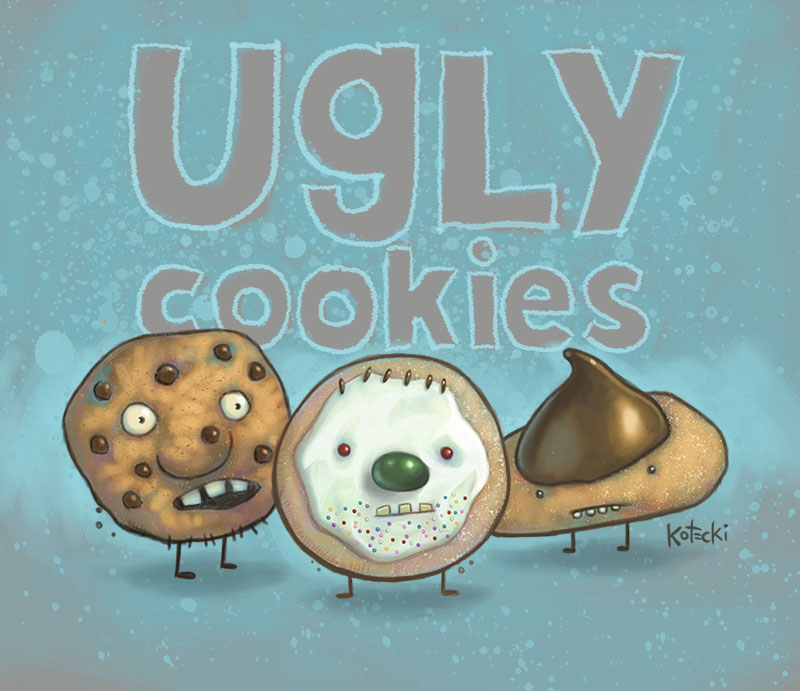
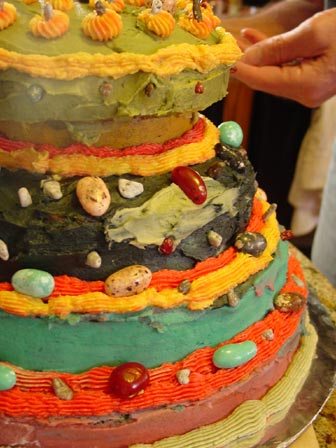
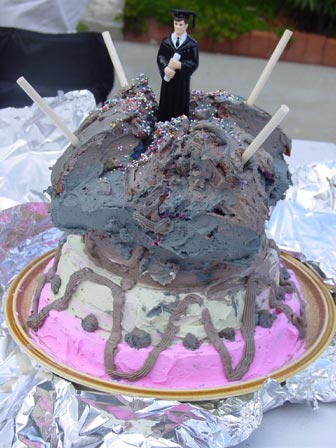
Even if you don’t celebrate Christmas, I’m sure you can conjure up an image of what Christmas cookies are “supposed” to look like. And although there are many different kinds of Christmas cookies, I’m guessing this is not the image that comes to mind first.
Believe it or not, these are, in fact, Christmas cookies. And they were not made by a four-year-old or a victim of the Great Kitchen Catastrophe of ’73.
The story of these so-called Ugly Cookies goes like this:
One year, a mother was overwhelmed with all the things she had to do to get ready for a Christmas party. With a list a mile long and not much time to complete it, she decided that she’d try a newfangled thing called delegation. So she turned to her husband and son….
“I have to run some errands before the guests arrive tonight. You guys are in charge of the Christmas cookies,” she ordered. “Here’s the recipe. There are only a few steps and a handful of ingredients. Just do exactly what it says.”
Since the husband and son loved Christmas cookies—especially the eating part—this was a good thing. But as they gathered the supplies, the conversation shifted to how unfair it was that every year, Mom made these cookies for guests, and they never got to eat any of them. And so they concocted a diabolical scheme.
Rather than making more cookies, they decided to make them as disgusting-looking as possible so no one else would want to eat them.
Black, brown, and army green frosting took center stage. Normal Christmas cookie cutters were abandoned for shapes like cows, race cars, and hands. Not mittens, hands.
When Mom returned home and saw the finished batch of ugly cookies, she was horrified. But it was too late to make new ones. So she positioned herself at the front door as guests arrived, and made sure that she told every visitor, “I did NOT make the cookies!” When people heard the story, they laughed. And when they saw them, they laughed harder.
Eventually, one brave soul decided to try one (perhaps she had too much eggnog?), and discovered that they were, in fact, delicious. So the original plan of the husband and son failed. But they were not deterred. They resolved to try harder next year.
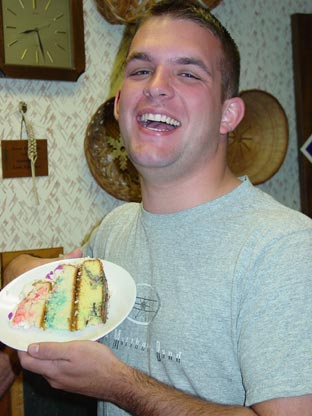
Eventually, they branched out into cakes.
The guys broke the rule of what Christmas cookies (or a graduation cake, for that matter) are supposed to look like. And they created a tradition that has lasted for twenty years. Their goal, year after year, is to make the ugliest Christmas cookies around.
And these pictures? They were sent to me by the mom. She’s proud of the tradition now. People look forward to it. In fact, her mom—the grandma—eventually requested an ugly birthday cake of her own.
What sorts of things do you do the exact same way every Christmas because you’ve ALWAYS done them that way?
What if you changed things up this year?
I’m not talking about the sacred, untouchable family traditions (although maybe I am). But what about the things you do automatically, without much thought and without any real meaning? After all, forgoing the stress that can come from trying to create a confection that might make Martha Stewart weep tears of joy is not nearly as fun as concocting something that would have her wailing and gnashing her teeth.
To take it a step further, what other things do you do every year, every month, every week, every day—at work or at home—because you’ve always done them that way? What opportunities could you uncover, what problems might you solve, what new memories might you create if you took a different tack?
My son Benjamin is only 15 months old, and he is a natural-born flirt.
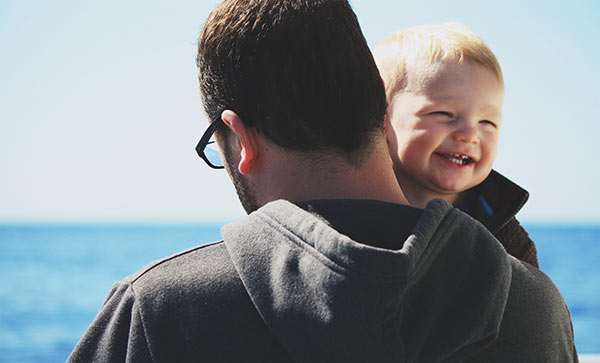
On a recent family vacation to Santa Barbara, Ben made friends with approximately 7,235 people. He doesn’t say much, but then again, he doesn’t need to. His bright eyes and broad smile do all the work for him. Whether it’s sitting on airplanes, waiting in lines, or dining at a restaurant, Ben is constantly scanning for someone to smile at. And if you catch his gaze, watch out. Women are stopped dead in their tracks, and grown men are immediately drawn into silly games of peekaboo. When Ben smiles at you, no matter what kind of mood you’re in, you can’t help but smile back.
He’s viral.
According to Wikipedia, something is viral if it can induce some agents to replicate it, resulting in many copies being produced and spread around.
I can guarantee this: there were more smiles in Santa Barbara last week than there would have been if Ben had stayed home.
But here’s the thing: you’re like Ben. You’re viral, too.
Your attitude is contagious. It spreads to people around you. If you want, you can spread smiles, enthusiasm, and optimism wherever you go. Of course, you can also be a harbinger of Adultitis. None of us lives in a bubble; we are each impacted by the people around us.
It’s often said that we should be the change we wish to see in the world. Sometimes a big change can begin with a simple smile.
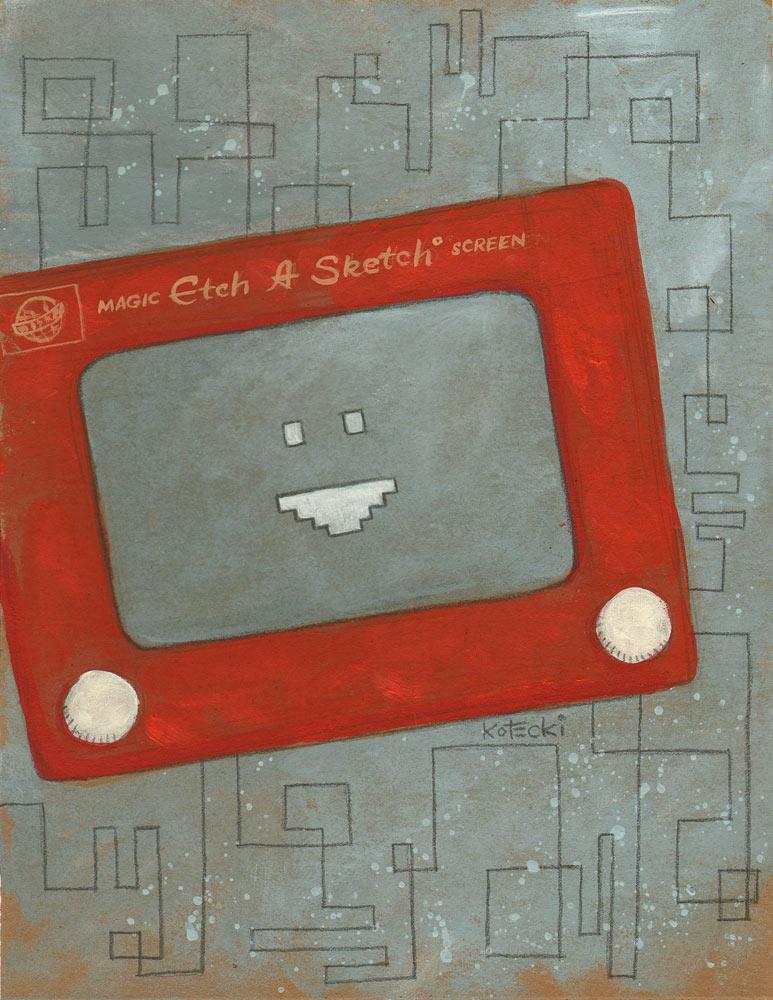
Andre Cassagnes, the dude who invented the Etch-a-Sketch, was an electrical technician. Cassagnes came up with the idea in his garage when he peeled a translucent decal from a light switch plate and found pencil mark images transferred to the opposite face. Initially dubbed the Telecran, the toy was renamed L’Ecran Magique, or ‘The Magic Screen,’ and made its debut at a toy fair in Nuremberg, Germany, in 1959.
Funny thing about Etch-a-Sketches.
Using one is ridiculously easy. (Especially if you want to draw, you know, stairs.)
But making anything worthwhile with it is really, really hard.
Even though some people make it look easy:
The cool thing about the Etch-a-Sketch is how easy it makes it to start over. You shake it up a few times, and you’re rewarded with a blank slate.
Which makes the Etch-a-Sketch a lot like life.
Living is pretty easy, thanks to the fact that your brain, heart, and lungs put much of it on autopilot. Making your life into anything worthwhile, however, is hard. Harder than spending an hour on Facebook or watching a Golden Girls marathon.
But God, the dude who invented life, also made it pretty easy to start over.
Each new day is an opportunity to start again. With a clean slate and a new optimism.
Of course, there are exceptions, but few things in life are unfixable. Sure, you may have messed up yesterday in grand, spectacular fashion.
Your project, meeting, or soufflé may not have turned out the way you would have liked. Maybe you got lazy, lashed out, fell down, or said something you regret.
That’s ok. Today is a new day, a chance to try again.
Have you ever noticed that you can always tell whether a child’s drawing was actually drawn by a child or an adult? Advertisements, signage, or product packaging will sometimes convey a childlike quality by including some elements supposedly drawn by a child. Much of the time, the drawing is done by a grown-up mimicking a child’s drawing. And you can tell it’s a fake.
Why is that?
It’s because the grown-up is trying to be something he or she is not. A real child’s drawing contains the bold, uninhibited, and unconventional expressiveness of that child. An adult can try to copy that spirit, but it is a fool’s game. The adult is burdened with too many pre-conceived notions: what color something is supposed to be, what shape something is, and how big it should be in relation to the other objects. Even though a grown-up may try to ignore those learned observations — by making the sun green or the house a triangle — she might not even consider the idea of making the trees float, which may be an obvious choice for a particular child. Usually, the grown-up ends up with an image that looks kind of like something a child would draw, but it’s always just a bit off, making it glaringly inauthentic.
Nothing beats an original.
We run into the same problem when we imitate someone else instead of just being ourselves. When we try to fit into a career that doesn’t suit us, mirror the journey of a personal hero, or follow in our father’s footsteps, no matter how well we do it, something will always be just a bit off. People can tell, and more importantly, we can feel it. Ironically, the reason we can’t pull it off is that too much of “us” gets in the way.
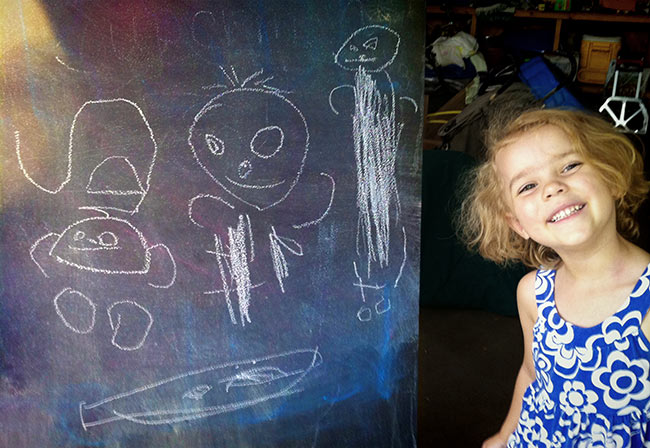
Like a child with a blackboard and a fat piece of chalk, what we need to do is open the floodgates and let the “us” run free. It is only when we boldly go in our own direction, tap into our own mix of unique talents, and embrace our own wonderful idiosyncrasies that we can fashion a life that is a truly authentic and inspiring work of art. It’s always better to be a first-rate you than a second-rate somebody else.
As my friend Scott says, “Cover bands never make it into the Rock & Roll Hall of Fame.”
There is magic in your originality. That’s what we want to see. And it’s exactly what the world needs.