Category: Uncategorized

  • Why “Ugly or Beautiful?” is a Trick Question

    One day Kim wrote a social media post about how ugly our backyard is after having been ravaged by a cataclysmic storm. The harsh, violent, apocalyptic hellscape is heartbreaking.

    And very, very ugly. 

    A well-intentioned commenter felt the need to correct her, “No, it’s beautiful.”

    Of course, the commenter is right. It is beautiful, in many real and metaphorical ways. And the photos Kim has taken of the carnage have captured some of that beauty.

    But you know what? It’s also ugly. Especially in comparison to what it was before.

    It can be both. It is both. And that’s ok.

    As I pointed out in my book, A Chance of Awesome, some people look at dandelions and see weeds. 

    Others – mostly kids – see wishes.

    The thing is, both are true. 

    Or take cars. Automobiles are modern marvels that give us great freedom and save us enormous amounts of time. The industry employs nearly two million people. But about 40,000 people die in motor vehicle traffic crashes each year in the U.S.

    So are cars good or bad?

    Unfortunately, our rotten news media has conditioned us to operate without any nuance whatsoever because there is profit to be made in conflict. We no longer seem to have the capacity for critical thinking; we’ve been reduced to the infantile reflex that things are either “good” or “bad.” Every issue is presented as either black or white, red state or blue state, right or wrong, good or evil.

    Ugly or beautiful.

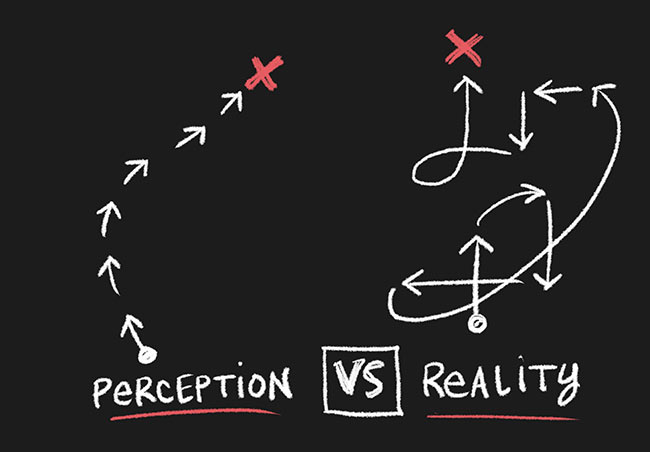
    When it comes to any story – especially the headline-grabbing issues of the day – we’ve been duped into believing we only have two options: be right or be wrong.  

    But life is more complicated than that. Life is both / and.

    When your kid heads off to college for the first time, it’s natural to feel a sense of pride as they move into a new season of growth and independence. It’s also natural to feel sad that your day-to-day interactions with them are coming to an end. 

    Or when a loved one you have taken care of for years has passed away, you probably feel sad that they are gone. It can also feel nice to believe that they are in a better place. 

    But you can also feel relieved that your burden has been lifted. 

    That doesn’t make you a monster; it makes you human. 

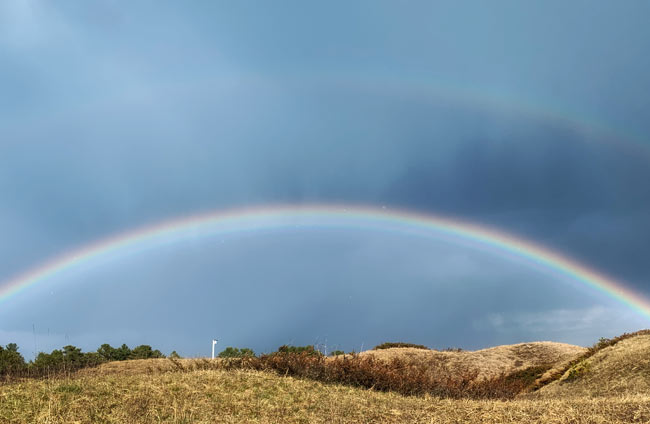
    We live in a complicated world with unlimited shades of grey. (Yes, even more than fifty.) It’s not helpful to force everything into an absolute. We don’t have to walk around wearing rose-colored glasses, deluding ourselves into thinking everything is unicorns and rainbows.

    Nor is it especially healthy to point out every potential storm cloud. 

    Both approaches are childish. 

    A mature perspective is acknowledging that life is filled with contradictions. There is good and evil, joy and pain, hope and fear intermingling in all of it. 

    We do have a choice about where we want our attention to dwell, which is one of our most overlooked and underused superpowers. But it’s important to remember that focusing on one doesn’t disappear the other. 

    Life is painful. It is also joyful. Sometimes on the very same day. 

    And that’s ok.

    Acknowledging the ugliness is what keeps us from taking beauty for granted.
  • How to Help Someone Who Is Grieving

    My young traveling companion poked me on the elbow with a request I didn’t see coming.

    From the moment Kim and I made the decision to move ahead with taking Ginny on her first Daddy-Daughter trip despite the storm that had wrought havoc on our home, my mind was in overdrive. 

    From forcing it to focus on what needed to land in my suitcase, to finding a gas station that had power so we could refuel, to asking the gate agent if he could make sure our seats were together, my brain was busy anticipating and solving every challenge that presented itself on our journey to Tennessee.

    Finally, we were on the plane, seats together, and her seatbelt was buckled. (Good thing they still have those important safety messages; the break from traveling left me rusty on knowing how seatbelts work.) Everything was going smoothly. Our first leg was almost over as we started our descent into Detroit. 

    Then came the gentle poke and the unexpected request.

    “Can I hold your hand?”

    She didn’t need to say anything else. The look of concern – but not panic – in her sparkling blue eyes said enough. It wasn’t her first flight, but it was the first in a while. And the landing part was giving her pause.

    “Of course,” I said as I grabbed her hand. 

    No other words were exchanged, but during the descent, every time her stomach sensed a sudden drop in elevation, she squeezed a little bit tighter. It made my Daddy’s heart swell.

    In the aftermath of dealing with the losses dealt by the storm, it’s been interesting to be on the receiving end of people trying to help us as we grieve. As far as I can tell, everyone is well-intentioned. But their level of effectiveness…varies widely.

    The truth is, helping someone who is grieving is incredibly hard. Especially when it comes to knowing what to say. We want to provide comfort, we want to take away the pain, we want to say the right thing.

    It’s hard. But Ginny helped me to see that maybe we make it harder than it needs to be. 

    When she meekly reached for my hand, she just needed me to grab it.

    She didn’t need me to tell her her feelings were wrong. 

    She didn’t need me to explain the physics of aerodynamics and how we were perfectly safe.

    She didn’t need me to remind her that other people are dealing with even scarier things. 

    She didn’t even need me to tell her it was going to be ok. 

    She didn’t need me to say anything. 

    She just needed me to hold her hand. 

    She just needed me to be there.

    On a day that had me feeling overwhelmed, overmatched, and out of my element, it was the one thing for which I was totally qualified.

    Maybe you’ve been given the opportunity to come alongside someone who is grieving. Maybe you will be soon. 

    It’s not an easy task, but you are plenty qualified for it. Don’t worry so much about what to say. They don’t need you to tell them their feelings are wrong, or how things could be worse, or about someone you know who went through something even harder, or even that everything will be ok. 

    It might be better if you don’t say anything at all. 

    Just metaphorically (or literally) figure out a way to hold their hand or give them a really big hug.

    It doesn’t seem like much, but trust me, just being there matters.

  • Life Keeps Going

    I woke up. The face of my bedside clock was expressionless.

    Still no power.

    It felt like time was standing still, but I knew otherwise. A quick check of my phone, whose battery was holding on for dear life, confirmed that I’d been asleep for exactly one hour. 

    I was awake, but unfortunately, the nightmare persisted.

    It was 1:30 am, but no more sleep would be had by me that night. Eerie lightning flashes periodically silhouetted the stripped and broken trees rising from the backyard like a witch’s bony fingers. It’s an image I’ll never forget.

    I had to leave for the airport in five hours. My mind raced to try and solve all the problems that flooded it, both real and imagined. I speculated how long food would last in a refrigerator with no power. I looked up videos on YouTube for instructions on manually opening an automatic garage door. A scan of local headlines spoke of fallen trees and downed power lines everywhere, and I wondered if making it to the airport in time was even possible.

    I had to figure out a way, even if it meant driving eleven hours on one hour of sleep. A conference filled with people was expecting an opening keynote speaker. And, based on the initial survey of the damage to our house and yard, I was not in a position to return checks.

    Only one thing seemed certain: my first Daddy-Daughter trip with Ginny would have to be canceled.

    Again.

    And the thought of telling her made my heart splinter like the white pines outside my window.

    I like to think of myself as a resilient person, cool under pressure. When a crisis comes up, my mind revs into overdrive and I work to solve the problems at hand. 

    I’m not unique in this regard. When life is disrupted by a storm, an accident, or an unfavorable diagnosis, it’s easy to shift into busy mode, frantically working to get things back to normal.

    This can be good, but also dangerous.

    It’s a trait that shows up not just in a crisis, but anytime there’s a project to be finished or a to-do list to be tackled. Adultitis encourages us to keep pushing, assuring us that there will be plenty of time for everything else once this hurdle is cleared.

    We barrel ahead until the work is done, telling ourselves that we can sit back and relax after we take care of one more thing. 

    The problem is, there’s always one more thing.

    And life keeps going, with or without our willingness to be present. 

    That’s why, at nine the next morning, I was helping my daughter buckle into her window seat on a jet bound for Chattanooga.

    In the light of day, after a neighbor helped us clear the driveway, Kim and I were able to have a clear-headed conversation about what to do. My first trip with Ginny was supposed to be to Orlando, but that was canceled thanks to COVID. If this one bit the dust, there wasn’t an obvious next one to replace it.

    I felt bad leaving Kim behind to handle the details as it was, but to spend it having fun in Tennessee with Ginny was especially guilt-inducing. It made a lot of sense to put our heads down, deal with the crisis, see about flying home right after the gig, and put her first trip off for another time.  

    But what if there is no “another time?” At the very least, this is our last summer with an 8-year-old Ginny. We won’t be getting another. 

    Life’s pretty fast. It’s easy to miss it when you’re in the constant state of busyness that’s so common in our modern age. 

    But it’s also easy to miss when life gets hard. 

    This realization is also why, although our to-do list just tripled in the aftermath of the storm, while we’re already knee-deep planning for our first out-of-state Escape Adulthood Summit, our family spent last Friday afternoon at the beach. It was a gorgeous day. We ate peanut butter and jelly sandwiches with our toes in the sand. Kim napped in the sun. I cuddled with Ginny, played catch with Ben, and joked around with Lucy.

    We filled our cups.

    Because you can’t drive through hell on an empty gas tank.

    Life keeps going, even in the hard times. We each have a certain number of days left.  It’s worth being reminded that the sands in the hourglass of our life don’t get frozen in place until the backyard is restored, the cancer has been cured, the diploma has been achieved, and things get back to “normal.”

    Life keeps going.

    Don’t fall into the trap of waiting for life to be just right before you actually live it. 

  • Lessons From My Older Self

    I wanted to share an update with you about what happened in the middle of our season finale 99th episode of Escape Adulthood LIVE. Kim and I had a lot of fun dressing up as 99-year-olds. There was much shenanigating (the first five minutes were worth the price of admission!). Near the end of our “Let’s Draw” segment, a severe storm knocked out our power, abruptly cutting the show short.

    As it turned out, the storm produced a 100-plus mile per hour straight-line wind, which from what I understand is like a tornado but instead of rotating, the wind comes in one direction. Kim ran upstairs to collect the kids. When she came back downstairs, one of the kids mentioned a tree had fallen, and Kim confirmed there was “significant tree damage.”

    After the storm settled a bit, I went upstairs to assess the situation. I was not ready for what I saw.

    I expected to see a few fallen trees, not a preview of the apocalypse. A hurricane-force wind had done its damage. Our backyard, which had at least a hundred trees, was nearly bare. They were just…gone. Uprooted trees were everywhere. A few jagged sticks jutted out from the ground – the remains of trees that had been snapped in two. Most of the rest were diagonal, ready to fall at any moment. 

    I walked outside into the dusk. It was raining lightly. Two trees had fallen on our roof, and another landed on our car, shattering the back window.

    Carnage was everywhere.

    By the time I went back inside, Kim had a cozy nest set up downstairs with blankets and candles and flashlights. We were in shock, still in our silly costumes, trying to process what just happened. We were grateful to all be safe.

    The days since have been a blur. It took about 24 hours for the power to be restored. I was scheduled to leave at 6:45 the next morning with Ginny for a speaking engagement in Chattanooga. It was supposed to be her first Daddy-Daughter trip.

    In bed that night, every time lightning flashed, the eerie silhouette of the craggy trees lit up like a living nightmare. 

    After “sleeping” for about an hour, Kim and I were up early to see about clearing the driveway. A friendly neighbor stopped by and helped me chainsaw the fallen trees and push them out of the way, clearing a path for the other car that was still in good shape. 

    After much deliberation, we decided to continue as planned, and Ginny and I headed to the airport. I tried to refocus my mind on the job at hand. Kim took on the Herculean task of calling insurance agents and tree guys and sorting through the mayhem that attracted a steady stream of onlookers perusing the devastation.

    I am writing this from a hotel room in downtown Chattanooga. My youngest daughter is still sleeping, tuckered out from two hours spent in the pool yesterday afternoon. My talk for the Tennessee Pharmacy Association was well-received, and Ginny served as my beautiful assistant, checking bingo cards and handing out books as prizes to attendees. My goal has been to be professional, deliver a remarkable presentation, and make this trip as memorable and fun for Ginny as possible.

    Meanwhile, my wife has been an All-Star, with her titles of “Director of Everything” and “Little Miss Details” proving to be accurate labels. My parents came up to help, bringing years of wisdom and a generator to power our refrigerator. So many people have stepped up to help in mighty ways. 

    Even amidst the shock of processing the initial damage, we have tried to turn any fear we’ve had into curiosity. We are heartbroken over the devastation of our property, but are already asking the question, “What does this make possible?” We are grateful for our safety, an outpouring of support, and amazed at the ways we are already seeing God work.

    I’m sure there will be more to report on that front in the coming weeks and months.

    One seemingly miraculous development is that even though close to a hundred trees were uprooted and tossed about all over our yard and house, the new studio renovation was completely untouched. This is especially significant because it had yet to be insured since the walls and roof were so recently finalized. 

    “Turn fear into curiosity” was one of the pieces of advice my 99-year-old self gave me in the monologue I delivered just a few minutes before the storm hit. I think it was one of my best monologues yet – definitely one of the most emotional – and I’m proud to be able to show it to you here.

    Thank you in advance for your thoughts and prayers as we continue to sort through this. It could have been much worse, and I am reminded yet again that it’s awfully hard to be mad or afraid when you’re busy counting blessings.


    🤔 I wonder…what’s something you’ve recently been reminded to be grateful for?

  • Beautiful Questions From Ugly Cookies

    QUESTION: Is it possible to create a working Volkswagen Beetle out of rice cereal treats and fondant?

    I don’t think so, but I wouldn’t be surprised to fire up Netflix one day and see it happen. I am awed by the mind-bending confections people create on those baking competition shows. It’s entertaining television. But watching them make their beautiful creations doesn’t teach us as much as the ugly stuff we create ourselves.

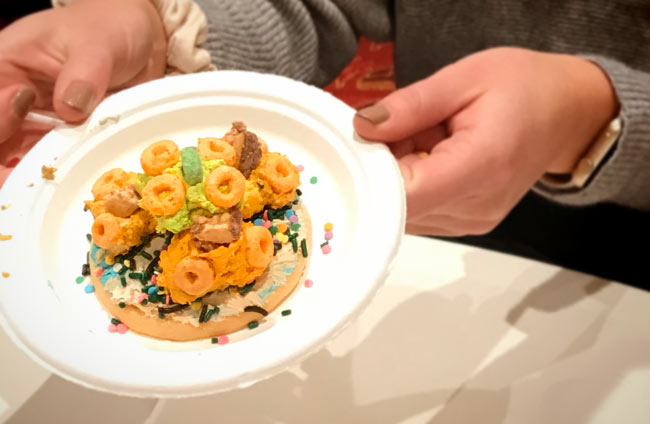
    A few years ago, I led an unusual workshop. Instead of whiteboards, charts, and slides, we rolled out frosting, sprinkles, and sugar cookies. There was only one objective: decorate your cookie to be as ugly as possible, Martha Stewart’s disapproving scowl be damned.

    There were about eighty people, each of whom accomplished the objective.

    Eighty correct answers, and yet every cookie was different.

    In life, as opposed to what we learned in school, there’s often more than one right answer. There are many ways to solve a problem, and our unique perspective and talents aid us and flavor our solution.

    As I interviewed participants about their creations afterward, one guy said, “I started out making mine, and someone commented that it looked like a spaceship. So I added licorice as exhaust to make it look more like one.”

    I asked him, “Were you offended by their suggestion?”

    “No, of course not, ” he replied.

    Which makes me wonder why we are so defensive when someone suggests a way for us to improve something? Maybe it was the seriousness – or lack thereof  – of the situation? Or the intent of the messenger? Perhaps the shared spirit around the task at hand set the tone for teamwork over competition.

    QUESTION: What would happen if we decided to take ALL advice with gracious open-mindedness, regardless of the intent or tone of the messenger?

    This is related to another thing I witnessed: the power of plussing. People at each table contributed small ideas to up the ugly factor. One guy had the idea of incorporating items from the breakfast spread to add diversity to the available materials. Others followed suit, then added their own tweaks. Each minor “improvement” worked together to achieve a wide array of remarkable results. 

    This “yes, and” approach, popularized by the art of improvisational comedy, engenders a supportive environment for risk-taking by making the process a shared one. It also makes innovation more accessible by encouraging small, doable experiments that build on one another.

    QUESTION: What would our organizations – and families!? – look like if we supported risk-taking rather than stifling it by punishing failure?

    As I acknowledged the unusual results brought forth by another group, they shared, “We started out trying to make them ugly, but then they didn’t look so ugly, so we settled on calling them odd.”

    I loved their willingness to pivot. We can’t always think or theorize our way to progress. It’s not always possible to know every step before we begin. Sometimes we just have to tinker our way there. 

    And sometimes we end up in a much different place on an undertaking than we thought we would when we began. It’s easy to grow frustrated and discouraged as we struggle to force our current circumstances to match our initial vision. But a careful review of the situation might reveal that we’re in a better place than we originally envisioned. 

    QUESTION: What if we embraced the potential and beauty of where we are now instead of comparing it to where we thought we’d be?

    The mission was accomplished that day. Complete culinary ugliness was achieved. The only thing delicious that came from this lighthearted activity was the life-changing questions that emerged. Beautiful questions I offer to you today. They might take some time to unpack, but I encourage you to do so and guarantee it’s worth the effort.

    Which is more than I can say about trying to make an edible automobile out of cereal and sugar.

    But then again, don’t underestimate the insight that can be gained in seemingly trivial pursuits.


  • My Secret to Being So Persistent

    My parents recently hosted us for a birthday dinner. In Kim’s card, my Dad had written something about us being the most persistent people he knew. Kim smiled, because we know how close a cousin “persistent” is to “stubborn,” which is a synonym for “unreasonable,” “pig-headed,” and “cantankerous.”

    But we took it for the compliment it was intended to be.

    Persistence, stubbornness, an abundance of sticktoitiveness…whatever you want to call it, we definitely have it.

    It’s what allowed us to keep going for twenty years before making it to our dream home on Lake Michigan. We endured years of financial loss, crushing debt, the disappointing results of failed plans, and excruciating stretches of time when momentum was harder to find than Waldo in a candy cane factory.

    That persistence served us well. It may have been our superpower, but it never seemed that special to me. Maybe because I know the secret.

    There were many times I wanted to wave the white flag. But whenever it felt like the jig was up and bankruptcy was looming, I just assured myself that if all this didn’t work out, Kim could always go back to teaching. I could always get a corporate job or manage a fast food place somewhere. We’d be fine.

    Then I’d think about how terrible it would be if I had to do that for the next twenty or thirty years. 

    And then I’d get back to work on the thing that excites me. Because moving forward suddenly wasn’t as hard, or hopeless, or impossible as it seemed. In considering the alternatives, I was reminded that I had a choice.

    Even now, when I’m in the middle of hosting a one-man woe-is-me pity party about how difficult I have it, how much this sucks, and how I don’t think I want to do this anymore, I call a timeout. I reflect on the summers of my teenage years, when I worked at a car dealership, enduring long days doing work that didn’t excite me. I remember how slow the clock moved as I counted down the minutes to freedom. I recall the pangs of dread that settled in on Sunday nights.

    That job is where I learned that I’m employable. It’s when I made the choice that I was going after my dream, no matter how hard the road or how long it took. In that promise, persistence was born.

    This is not a message about never quitting, which is sometimes the wisest course of action. It’s about reminding ourselves that quitting is only one of the options.

    Adultitis prefers us playing the victim card. It very much enjoys us feeling powerless and without any choices.

    But we always have choices.

    We put its panties in a bunch when we play the perspective card. When we look at how far we’ve already come, or take an honest accounting of all the options at our disposal – while realizing how many of them are worse than our current situation – we can pull ourselves from the pit of hopelessness. 

    Laying all the choices out on the table can help remind us that we are on the right road after all. Sometimes, being faced with a less desirable scenario immediately brings to mind some new thing we can try in our present situation.

    I’m sure there’s a little bit of persistence involved, and a dash of needing to be my own boss, but mostly, the thing that kept me going was simply reframing my situation.

    What is the secret to being persistent? How do you keep going when you really want to throw in the towel?

    You simply remind yourself of ALL the choices, and why “keep going” is the best one.


  • The Myth of Perfect Timing

    Is it weird that I don’t remember my first kiss?

    That’s weird, right?

    Another fun fact is that my first few kisses were instigated by the girl, not me. And that’s not because I had so many of them chasing me; it’s because I was waiting for the timing to be perfect.

    Was I waiting for a red, Jamaican-accented crab holding a big neon sign blinking, “Kiss the girl!”? 

    No, of course not. That’s ridiculous.

    I was waiting for the billboard after that to assure me that the first sign was the sign I was waiting for.

    Truthfully, I was afraid. I was lost in questions: Is this the one? How can I tell if she wants me to kiss her? How am I supposed to do this, anyway? How is my breath? What if I do it wrong? Will she laugh at me? Will she tell all her friends? Will I die alone, single, and unloved? Yep, I’m totally going to die alone, single, and unloved.

    While I was swimming in the fog of self-doubt and existential dread, I guess the girl got tired of me missing the neon sign, the billboard, AND the marching band and leaned in and went for it. And then, caught off guard, I may or may not have blacked out, which might explain why, although there are a few contenders, I can’t remember which one was technically my first kiss.

    As you can see, I can be a bit of an over-thinker, lost in the weeds as I wait for the timing to be right. Fortunately, as I’ve gotten older, I have also gotten better at making the first move and worrying less about perfect timing.

    I’ve learned that it’s a fool’s game trying to determine the right time to do anything.

    When is the right time to kiss the girl?
    When is the right time to start a family?
    When is the right time to go back to school?
    When is the right time to start that business?
    When is the right time to sell that stock?
    When is the right time to retire?
    When is the right time to take that leap your heart is begging for?

    I don’t know.  No one does.

    Perfect timing is only obvious in retrospect.

    If you’re wondering about the right time to do the thing you’ve been mulling over, I do know this: it’s probably a lot closer to NOW than later.

    I am a planner. I believe wisdom is important when making decisions. These are good things. But there is a certain wisdom in the adage that advises jumping off the cliff and building the parachute on the way down.

    Because that’s what happens anyway.

    In life and in business, there are no perfect plans. As noted philosopher Mike Tyson once proclaimed, “Everyone has a plan until they get punched in the mouth.”

    But the good news is, as Marie Forleo reminds us, “Everything is figureoutable.”

    Meanwhile, as we wait for the stars to align, we miss out on opportunities right in front of us.

    One of my favorite things is getting to take one of my kids with me when I travel for a speaking engagement. We’ve made a point to make the first one with each child kind of epic. At a gig in San Diego, I took Lucy to the zoo and we got to see a cheetah run. Ben joined me on a trip to Orlando, where we rented a convertible and visited Legoland.

    Finally, it was my youngest’s turn. I secured tickets to the Magic Kingdom for me and Ginny after an organization booked me for their national conference in Orlando last December. The timing was perfect.

    Then COVID.

    The event switched to virtual, and our epic trip was put on hold. It was excruciating to tell her the trip was canceled after we’d spent so much time looking forward to it. Since the Disney tickets are transferable, I’ve been waiting for another opportunity in the area to present itself. So far, nothing has. I didn’t want to “settle” on a “lesser” first trip with Ginny, but I recently decided to move beyond this self-imposed restriction. 

    Our first trip together will now be, drumroll, please…

    …Chattanooga, Tennessee! I know, exciting, right?! It may not be the sexiest destination, but I also know that for Ginny, it’s more about spending time with me than where we go. I also know that life offers no guarantees, and if I keep waiting, I may miss my chance to take her on a trip altogether. Or, less dramatically, we’ll end up taking far fewer of them than we could have. (Of course, the next gig anywhere near Orlando has her name on it, no questions asked.)

    One of the best tricks Adultitis has at its disposal is convincing us to wait for the timing to be perfect. It’s a trap that allows us to hide, fear to win, and the clock to run out.

    The clock runs out for all of us. The end is sooner than you think.

    Most people wish they’d gotten started on that thing they now love earlier, not later.

    Most people wish they’d had more kids, not less. 

    Most people on their deathbed are more regretful about the things they didn’t do than the things they did.

    You’re never “ready” enough. You never have enough saved up. You’re never cool enough, strong enough, smart enough, confident enough, worthy enough, or lovable enough. 

    From your first kiss to your first business trip with your kid, the timing is never perfect.

    Sometimes you have to quit overthinking it and just jump.


  • Curating a Life

    I took my kids to the art museum the other day. It had an exhibit featuring artwork by local students, from kindergarten up to high school. Afterward, we checked out the other exhibits from the more experienced, grown-up artists.

    I liked the stuff from the kids better.

    It got me thinking about the role a museum curator plays. A quick Google search explains that he or she acquires, cares for, and develops a collection. They also arrange displays of collected and loaned works and interpret the collection to inform, educate, and inspire the public.

    I wonder how they decide what exhibits to run, what artists to feature. How do they choose what paintings to include in each show? I know enough about the job to understand that oftentimes, the curator has a certain narrative they are trying to tell with a particular exhibit, and the goal isn’t necessarily to show the “best” work, which is mostly subjective anyway. Rather, they select pieces that support the story they’re telling. And no matter how big the museum is, space is not finite, so every piece included means that others will have to be left out.

    We rely on curation every single day, and I’m not just talking about art museums.

    In the olden days, and even in many third-world countries, a lack of knowledge is a problem. Not for us. In an era when we’re flooded with more information in a day than a person living a few hundred years ago had to deal with in her whole lifetime, curation is more important than ever. The trick isn’t uncovering more information; it’s deciding what matters and what doesn’t. That’s the power of curation.

    At the restaurant, we ask the waitress what she recommends.

    We rely on bestseller lists to tell us which books are worth reading.

    We let Netflix suggest movies to watch based on our past viewing preferences.

    We depend on the organizers of the conference we are attending to assemble the experts worth hearing from.

    We even curate our social media feeds to deliver news and updates from people we know, like, and trust. (Even though this may not result in us receiving a full or accurate picture of reality.)

    Early in our lives, our parents or guardians serve as curators for our lives. That’s especially how Kim and I view our responsibility as homeschooling parents. We don’t feel pressure to “teach” our kids anything, but rather to assemble for them a tapestry of experiences and opportunities that might spark their curiosity. That curiosity takes care of the learning just fine.

    In the last few weeks, we’ve watched documentaries about the International Space Station, Disney animators, and a free solo rock climber named Alex. We haunted the library and spent an hour browsing the stacks of books we collected from the shelves. We went to a rock concert and are planning a field trip to see how they tap maple trees for syrup. 

    On the flip side, we also make choices about what things to exclude from their young lives. We consider their level of maturity and understanding and wisely discern what’s useful and what’s rubbish; what will help them grow and what might lead them astray. We limit screen time, sweets, and movies that we don’t feel are appropriate. We realize we cannot protect them from all the darkness they will encounter in life, but we shield them from dangerous situations as best as we can during these formative years.
     
    Good parents are the curators of their kids’ lives until they have grown in age and wisdom to be able to curate their own.

    Regardless of how intentional or effective your parents were about the task, the job of curating your life is now yours alone.

    Like a museum curator, you are telling a story with your life. How deliberate are you? 

    What movies do you watch?
    What books do you read?
    Where do you get your news?
    What websites do you frequent?
    Who do you follow on social media?
    What foods do you eat?
    Where do you travel? 
    What people are you allowing into your life?
    What habits are you cultivating? What experiences and ideas are you exposing yourself to?

    “The ideas you consume determine the person you’ll become.”

    –Josh Spector

    Every decision about how you spend every minute of your day is a choice, whether it’s conscious or not. Are the choices helping you grow and thrive? Or are they leaving you less healthy and more depressed?  Are they growing flowers or sowing weeds? 

    The things that you allow into your life are important, but so are the things you decide to leave out, such as negative influences, time sucks, and activities that distract you from living your best life. Successful serial entrepreneur Gary Vaynerchuk reminds us of this fact: “Miraculous things happen when you cut out your most pessimistic friend. You become more optimistic.” 

    Regardless of how much thought or time you’ve put into it, understand this: you are the curator of your life.

    How would you rate it? Is it meh…or amazing?

    Is there something you could add or remove that would make your story stronger?

    A lot of questions here, and I’m afraid I’m not able to provide many answers. 

    Your time is finite, and the decisions about this exhibition called life are entirely yours.

    May your brave choices wow us all.

  • The Miracle in Your Mailbox

    A stamp is a miracle.

    For just fifty-eight cents, someone will come to your house to collect a letter you’ve written and hand-deliver it to the house of someone else anywhere in the country.

    Heck, back in the old days, you had to be royalty with great wealth and servants at your beck and call if you wanted a personal message delivered to someone in your kingdom.

    Even now, if you lived in Miami, how much time, money, and effort would it take you to hand-deliver a birthday card to a friend in Seattle? Depending on whether you took a plane or car, and if you had any overnight stays involved, it might cost you a thousand dollars or more.

    Instead, a mailman will do it for the tidy sum of fifty-eight cents, and you can stay on your couch in your pajamas polishing off a pint of Chubby Hubby. 

    Miraculous.

    It makes me wonder why we don’t avail ourselves of this magic more often. Because perhaps the best part of the whole thing is receiving a real greeting card or a handwritten letter from someone else. You have a permanent record of someone’s inner thoughts, and a relic of them, in the form of their own handwriting, their unique signature. They had to lick the envelope. They affixed the stamp. It’s like a little craft project, made just for you.

    It’s extraordinary because it’s rare. We don’t do snail mail much anymore; it takes too long. An email or a text is quicker. 

    In this harried world, there is something special knowing that someone had to hit pause on their day, on purpose, to complete a physical action that took longer than pounding out a few keystrokes on their laptop. That’s the coolest part: the indisputable fact that they were thinking of you. You mattered to them. And they gave someone very specific instructions to deliver that message directly to you, as quickly as possible. 

    All for fifty-eight cents.

    This isn’t an advertisement for the postal service, although they do have some amazing people in their ranks. It’s a reminder that there are miracles all around us. 

    If you can’t see them, you’re not paying attention.

    I hope this inspires you to send a miracle to someone today.

    [ 💌 Want a printable version you can print and share with your favorite postal worker? Here you go! ]


  • Increase Your Margin for Fun

    Did you used to be fun?

    Next time you look in the mirror, I challenge you to ask the question, “Would I want to hang out with me?”

    I know a lot of people who label themselves as “un-fun,” wishing it weren’t so but resigned to a monotonous stream of grown-up responsibilities, obligations, and commitments.

    If that describes you, take heart. I refuse to believe that you’re the boring, stick-in-the-mud fuddy-duddy you (or your favorite teenager) feel like you are sometimes. That fun-having expert with a PhD in Play is still there. The problem might simply be that you don’t have any margin for fun.

    Margin for fun?

    Yes. You’ve probably heard of “margin of error,” so let’s start there. A margin of error can be defined as how many mistakes you can make and still be able to achieve something. If you’re an Olympic athlete, one misstep can take you out of medal contention. It’s usually stressful when your margin of error is too small. Maybe you’re not an Olympic athlete, but if you’ve ever had too much month at the end of your paycheck and the transmission went out in your car, you know what I’m talking about.

    Likewise, life is harder and less enjoyable if you don’t have enough margin for fun. 

    What causes this? How does our margin for fun get so narrow?

    It could be a result of doling out too many yeses. The more projects you’re juggling, the more activities your kids are in, the more committees you sit on, the less your margin for fun. One thing going wrong in your day becomes a grenade chucked into your fully-stocked china shop of a schedule. Not fun.

    You can also limit your margin for fun by worrying too much about stuff that doesn’t matter as much as you think it does. You’re gonna have to do your own reality check on this one, but demanding anything close to perfection from, say, the cleanliness of your house, your kids’ report cards, or your own self is usually an effective way to dramatically decrease your margin for fun.

    And sometimes we are afraid to indulge in fun because we think it will make us look silly. And it’s true; it might. Taking a selfie with a statue could draw some sideways glances. You will almost certainly look ridiculous ice skating for the first time. But, as comedian Amy Pohler reminds us, “There’s power in looking silly and not caring that you do.” Giving too much weight to what other people think of us is a pulverizer of fun. 

    This idea originated from a mom named Sara, who heard me speak at a conference in Arizona. She wrote: 

    “I am a full-time teacher, mom of FOUR (15, 13, 10, and 8), and my husband and I serve on the boards, manage the teams, etc. My kids are busy with school, sports, and technology. After hearing your keynote, I want to increase my margin for fun.”

    When you have no margin for fun, Adultitis is primed to take over.

    So, how does one increase their margin for fun?

    First, try dialing back on the yeses. Limit commitments, reclaim a Sabbath, or even one night a week. A tightly-packed schedule suffocates fun. Give your calendar some room to breathe, increasing the opportunity to embrace spontaneity, linger for one more hour, or take the long way home. Fun needs room to run and likes to hide off the beaten path.

    Secondly, let go of perfection and lower expectations. I’m not talking about letting everything go to hell. I’m not talking about not caring, trying hard, or doing a good job. I’m talking about getting really honest with yourself to make sure the standard you’re setting for yourself isn’t just a way of proving your worth or patching over some pain by trying to achieve some Pinterest-fueled fantasy. If something doesn’t go according to your perfect plan, what’s really the worst that will happen? Saying the answer out loud is a great way to expose the impotence of this lingering fear. Lowering your expectations a smidge gives fun permission to emerge from the shadow and make some magic.

    And finally, give yourself permission to look silly. The older I get, the more I’m convinced that the inability to feel embarrassment is a superpower. I have a friend who has a personal rule to always enter swimming pools via cannonball. It’s the least invisible entry method, but it’s undeniably the most fun. 

    Why bother with any of this? Why work on increasing your margin of fun?

    Because you only get one life, friend. This is it. Yes, it can be hard, but it can also be amazing. And it’s way too short to be so serious all the time. At the risk of stating the obvious, a fun life is a BETTER life. A HAPPIER life. A LESS STRESSFUL life.

    They say the only certainty is death and taxes. That’s because the fun is up to you. 

    And it’s closer than you think; you just need to make some room for it on the Ferris wheel. 

    I encourage you, I beg you, I beseech you…increase your margin for fun.


💌 Get next month’s exclusive Mini*Print! Join the Collector Club
00 days
00 hr
00 min
00 sec