Category: Uncategorized

  • Cornerstone Faith

    This is a picture of Kim and me at the Cornerstone music festival, very early on in our dating years. Together with friends, we camped out with thousands of other Christian music fans in the middle of a field during a sweltering stretch of Illinois summer.

    Here we are showing off our “hardcore” faith represented by sun-kissed cross “tattoos” made with two Band-aids.

    Nine years of Catholic school provided a decent foundation for my faith, but it didn’t really come alive until the year after I graduated high school, about the time this photo was taken. I was on fire for God, excited to learn all I could, and eager to change the world. 

    Like the tough face trying to overcompensate for the not-so-tough biceps,  I projected a strong faith.

    I look back on this photo and I see a pure faith. But not a strong one.

    I have often wondered where that kid went; the strong, self-assured, faith-filled warrior. I feel like I used to be so much more on fire, more certain, and have fewer doubts. 

    I’m not sure I was really any of those things, but I definitely was a lot more naive. I was like Luke Skywalker, who, after getting some brief instruction from Obi-Wan Kenobi and a few days of training from Yoda, announced he was ready to go off and fight Darth Vader and tear down the Empire. “I’m not afraid,” he boldly claimed.

    “You will be,” replied Yoda.

    Just like Luke, Kim and I were serious and sincere about our faith, and yet we had no idea – how could we? – how much it would be tested. 

    In my late twenties, I felt like all that passion got burned up. I was left drifting, afraid, and confused. Building a business was harder than I expected. I’d wondered if I’d taken a wrong turn somewhere because I didn’t feel as certain as when I’d first begun. I was worn down by years of burdensome debt, flirtations with bankruptcy, and a series of steps forward followed by two steps back. Kim and I were inundated with doubt over whether we’d ever be able to have kids, afford a home, or make a living with our dreams and talents. Discouragement led us to wonder if we were merely deluding ourselves.

    But each time we encountered a challenge, like the time our hand-me-down van needed major repairs that would deplete our checking account or the time we spent two days and several hundred dollars to make $7.92 in sales at a craft show, we were faced with a choice:

    Abandon ship, or keep pressing on.

    Again, we were like Luke, when he began to rely less on himself and trust more in the Force. We pressed on, not because we knew the way forward, but because we believed in a God who did. We chose to believe in His promises rather than the negative voices in our heads. We chose to doubt our doubts and believe our beliefs.

    And those small choices were little nudges that kept us on course, even though we weren’t sure where we were headed.

    Choice by choice, we became stronger.  

    Now, with a little more mileage on me and more journey to look back on than when this photo was taken, I can relate to Yoda. 

    I know what it means when they say that faith is tested during hard times. I see now that those choices are the journey. They are the reps that make you stronger.  Even now, when I feel weak, I know the truth that I am exceedingly stronger than I ever was back then.

    Instead of rolling my eyes when I look at this photo (which is extremely tempting), I appreciate the brilliant flash of youthful hope and the belief that anything is possible. It’s important. Just as a space shuttle uses over ninety percent of its available fuel just to achieve orbit, our passion gives us the rocket fuel we need to get started.

    Eventually, we did figure out how to make a living at all this. We did get out of debt. We did start a family. And we recently bought our dream house on a lake. None of it would have happened were it not for the naive passion of that skinny kid in the big glasses flexing his non-existent guns. Or the God who never once rolled His eyes at him.

    Those sun-kissed tattoos faded long ago. But in another respect, they’ve become permanent and more real.

    I don’t know where you are in your journey right now. Maybe you are overflowing with confidence and eager to begin your new thing. Good! Use that passion to fuel you, for it will take you far. Things might not turn out as you’d expect, but that’s ok. You’ll figure it out. Just keep going and trust in the One who planted that dream in your heart.

    Maybe you have run out of gas and feel like you’re drifting in orbit somewhere. Good! Use this time to appreciate the view and realize how far you’ve come.  You’re farther along than you think and stronger than you feel.

    Maybe you are the Jedi master who can relate to this because you’ve been through all the stages. Good! Pass the experience you’ve gained on to others. But don’t squash the enthusiasm of those first starting out. They don’t need your bucket of ice water telling them how naive they are. Amplify their energy by using your hard-earned wisdom to nudge them gently in the right direction.

    It’s been said we are all the ages we’ve ever been. We’re still the cocksure teenager, the uncertain young adult, and the sage with wisdom gained through experience. 

    All of them matter. All of them serve a purpose. 

    The way to honor them all is to keep going.

  • Time for New Shoes and Wineskins

    My Grandma on my mom’s side used to tell us stories about her childhood. I remember a tale about her shoes. When the soles wore out, instead of buying new shoes, her father would re-sole them with rubber from old tires. She and her sister were mortified to kneel at the communion rail at church for fear that their classmates would be able to read Goodyear on the bottom of their shoes.

    (I can’t help but think how much the bottoms of modern-day sneakers look like tire treads, with brand logos stamped upon them. Perhaps my grandmother and her sister were just ahead of their time?)

    I can certainly appreciate the thriftiness of my great-grandfather, but I share this story because of the times we persist in trying to make something old work when we’d be better off letting it go.

    Like a routine that served you well for years. 
    Or perhaps a client relationship that used to be fruitful.
    Or maybe it’s a mindset that led to many beneficial decisions.

    Just because something served you well in the past doesn’t mean it’s serving you well now.

    Seasons change. The world does, too. And as we age and collect new experiences, we gain new knowledge and grow in wisdom. Hanging on to an old routine, relationship, or mindset may actually be a barrier to growth and future success.

    In the olden times, they used to store wine in animal skins. As the alcohol fermented, the skins would naturally expand. A problem occurred if you tried to put new wine into old wineskins. Already brittle and stretched to the limit from the process, the old wineskins would burst when the new wine fermented. 

    Resulting in a ruined wineskin. And even worse: bye-bye, wine.

    It’s worth considering that the original wineskin – the one now stretched and brittle – was good for its original use. It served its purpose splendidly. Opting for a new wineskin for this new batch of wine is not a condemnation of its performance. It simply won’t work for preparing new wine.

    It helps to get in the habit of asking yourself one of the most useful questions ever: WHY do I do it this way?

    Answering that question, honestly and accurately, is a terrific way to determine whether or not that old way of doing things is still serving you.

    With our family moving into a new home in a new city, I have taken it as an opportunity to rethink my old standard operating procedures. Everything from my work schedule to our family routines, and even where we put things in our kitchen, is up for reconsideration.

    I’ve been asking “why?” a lot.

    When we moved in, we reflexively put our oven mitts and dish towels in the same drawer, just like we’ve always done. It didn’t take long to get frustrated with how inconvenient it was to fetch a towel from the drawer when washing dishes. Upon further review – aka asking “why?” – we determined the reason for storing the two things together in the old house was that we had limited space, and the oven and sink were right next to each other. With more drawer space and the oven and sink further apart in the new house, this arrangement no longer made sense.

    It’s a simple example that applies to every area of life.

    We recently booked our first in-person speaking program since last March. After almost a year of doing virtual programs, it’s a prime opportunity to re-evaluate my on-stage presentation by asking a lot of WHY questions. Of course, it would be easier to resume doing what I’ve done in the past, but that would be like putting new wine into old wineskins. 

    Or, going back to the metaphor of the recycled shoes, I could certainly take the new things I’ve learned doing virtual presentations and slap them onto the old way I’ve always done in-person programs. Instead, I’m planning to re-channel all this experience into a brand new thing, which I suspect will be even better. There will be some heavy lifting involved, but I’m excited about the possibilities.

    What area of your life could benefit from a new way of operating?

    Indeed, sometimes we keep things as is because change is hard and the status quo is more comfortable. Sometimes we’re just too busy to consider anything else. And sometimes we just haven’t been mindful enough to stop and ask, “Why?” 

    I’m a pretty nostalgic guy. And I’m all for upcycling whenever possible.

    But sometimes you just need to spring for a new pair of shoes.

  • My Grandma Was a Magician

    “Portrait of Grandsons” by Virginia Kotecki.

    My grandma was a magician. 

    Not the kind prone to cutting grandchildren in half or pulling rabbits out of vintage hats, mind you. 

    She was an artist. The first real artist I’d ever known. My parents had one of her paintings hanging in their bedroom. It was a big one, a landscape featuring a shimmering blue lake. At the edge of the lake was a small dock with two tiny figures sitting at the end. Me and my brother Dan. It really looked like us, and the landscape was pristine, like a real photograph. I loved staring at that painting, wondering how she did it. 

    Pure magic.

    You can’t be exposed to that brand of magic and not have it affect you. 

    As I pursued art, I felt the presence of that same magic when I’d create a portrait of an athlete that would cause people to say, “Wow, that looks just like him! How did you do that?!”

    Then, later, when one of my comic strips would make someone on the other side of the country laugh out loud.

    And I get that same feeling even now, when someone sees something I made, read something I wrote, or hears me tell a story in a speech that gets them thinking in a new way or inspires them to change something about their life.

    It is a rush anytime I can create something that instills wonder, makes someone happy, or reminds them of something important. It feels a whole lot like magic. So how can I not spend my days doing that?

    Thanks a lot, Grandma.

    The thing is, we’re all magicians. Or at least we can be.

    We all have something we do well, that when we do it, it seems like magic to other people. The thing is, it probably doesn’t feel like magic to you. That which we do well comes easily to us, making it easy to undervalue.

    My wife has a way of seeing nature with her camera that is awe-inspiring.

    My friend Sue talks with her hands in a way that looks like poetry.

    My friend Jason can lift someone’s spirits using only the look on his face.

    Don’t confuse your magic with the sexy talents that find their way to TV. They may not always be glamorous, but that doesn’t make them any less powerful.

    It could be the way you can understand tax law to help your clients save money.

    It could be the way you can whip up a delicious meal with four ingredients and a pinch of salt.

    It could be the way you can organize an event without breaking a sweat. 

    It could be the way you help people feel good about themselves.

    It could be the way you make people feel seen and cared for.

    Whatever you do that gets people to smile, laugh, cry, think, try again, or gasp in wonder…that’s your magic. When you’re in the middle of doing something that makes you feel, “I was born to do this,” that’s it. That’s your magic.

    Whatever it is, honor it. Guard it. Cultivate it. Spend your days doing more of it.

    These days, it’s easy to feel let down by our leaders, our governments, and our social systems. We demand that something be done. We can lament what we see on the news and in our social media timelines, but then what? If we stop there, we remain mere spectators. 

    We must become active participants. We need to bring forth our magic, which, of course, is not magic at all. 

    It is the spark of your Creator, the spirit of God within you.

    You have been given gifts. Don’t bury them. Don’t minimize them. Don’t wish they were more like someone else’s.

    Use them.

    This is what the world needs. This is how you should spend your days. This, my friend, is why you are here. 

    And you never know how much sharing your magic will inspire others to discover their own.

    Thanks a lot, Grandma.

  • How to Be an All-Star Without Any Talent Whatsoever

    Why YES that is an All-Star uniform. Sorry, NO autographs, please.

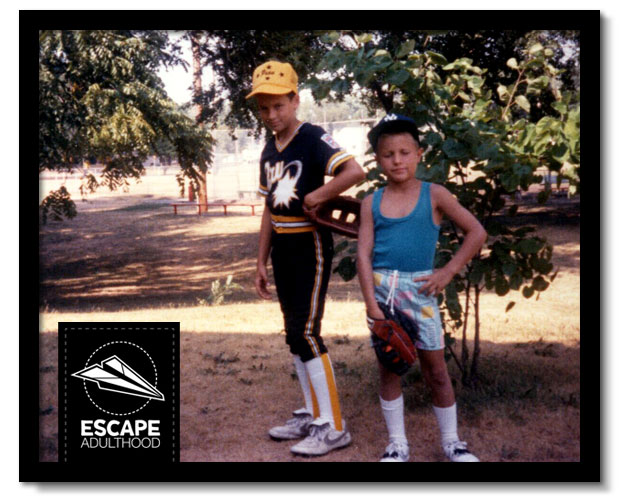
    When I was twelve years old, I had a fastball you wouldn’t believe.

    That is, you wouldn’t believe anyone would call it a “fastball” if you saw how slowly it traveled.

    I had great control, rarely walking anybody, but I had no curveball, no slider, no screwball…just a not-so-fast fastball and a change-up that defied the laws of physics by being even slower. I swear I saw batters salivating while they were on deck.

    I did make the All-Star team that year, but not for my pitching acumen. My team never won a game while I was on the mound. One time, I got hit in the leg by a line drive that was hit so hard, it tore a hole in my sock. If you’re imagining Charlie Brown getting knocked off the mound, you’re on the right track. The only difference is that I had more hair.

    Then, when I was thirteen, I advanced to a new league and got a new coach: Mr. Dawson. For some reason, he kept using me as a pitcher and seemed to make it a personal mission to get me my first win. He was so encouraging, I started to believe that it was possible. 

    And lo and behold, as the season was winding down, it happened. Our team won the game with me as the official winning pitcher. I don’t remember the score of the game. I don’t remember where it happened or who it was against. But I do remember how proud Mr. Dawson was, and how good it made me feel to reward him for all his encouragement and belief in me. And that confidence he instilled in me lasted long after my pitching career ended.

    I heard once that the devil’s favorite weapon is discouragement.

    I remember thinking how unimpressive that sounded. Surely there were higher profile, more obviously devastating, headline-grabbing tools at his disposal. Discouragement? It sounded pretty wimpy to me.

    I’ve now come to see it as a colorless, odorless, poison: completely untraceable and devastatingly lethal.

    Dictionaries define discourage as “depriving of courage or hope; to cause someone to lose confidence or enthusiasm.” When you consider that the roots of the word “enthusiasm” are “en” and “theos,” which means “God within,” you can begin to see how destructive discouragement really is.

    It is scattered by the enemy like invisible seeds, taking root and sprouting into cynicism, choking out hope. Our inner monologue is fed an unending stream of discouragement every day, as lies masquerading as truth:

    You failed. That means you’re a failure.
    You’re not making any progress.
    You don’t have what it takes.
    You shouldn’t even bother.
    You’re kidding yourself.
    Who do you think you are?
    What difference will it make?
    Why bother trying?

    You’re hopeless.

    Any of those sound familiar?

    You can reach the point where you’ve been bombarded by so much discouragement, it becomes a habit to look for evidence proving discouragement right, blinding you from opportunities to prove it wrong.

    When hope is snuffed out…it’s game over. And the devil wins.

    This is why encouragement is one of the most powerful weapons we have at our disposal. Mr. Dawson used it with remarkable results, as did every other great teacher and mentor I’ve had in my life. Their encouragement gave me fuel to keep going until I could eventually see the truths about myself they saw first. If you’re sincere, it’s practically impossible to overdo it. 

    Each day is a mixture of good and evil. Encouragers are there to remind us of the reasons for hope.

    And you don’t need to have any real skill to wield it. You don’t need to wait until you have it all figured out. You don’t even need to be free from discouragement yourself. In fact, one of the best ways to strike out your own discouragement is by encouraging someone else. 

    It’s possible to change someone’s life. Most of the time it starts with changing their day first.

    Who needs a word of encouragement from you today?

  • Whimsy is Underrated

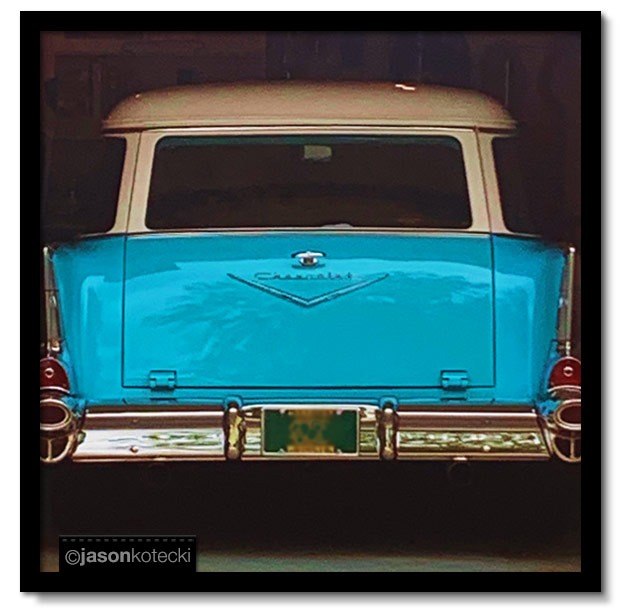
    I saw this car in my neighborhood the other day. It’s a real head-turner, with all of its whimsical flourishes and flair. They don’t make cars like this anymore.

    And that’s a shame.

    In the 1950s, cars featured all sorts of angles, fins, and bright colors. They were sleek, fun, and bursting with personality. 

    The Jetsons gave us the wrong impression. Not only do we NOT have flying cars yet, we actually seem to have devolved our automotive design, settling for something that resembles a safe deposit box with the sharp edges sanded down and all the personality of white bread.

    Car designs these days are way more homogenized. Instead of standing out, they blend in. If you squint, you can barely tell the difference between a Ford, a Toyota, and a Honda. The top-selling colors are white, black, or some shade of grey.

    The practical-minded and Adultitis-riddled among us might argue that the flourishes from 1950s car design are unnecessary. After all, they don’t help improve safety or performance. 

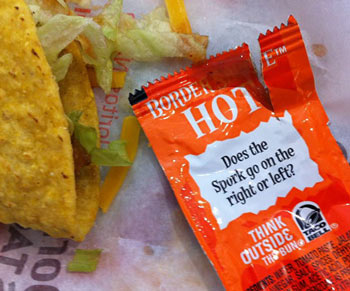
    Or consider these hot sauce packets from Taco Bell. The message is whimsical, and yet it has no impact whatsoever on the contents of the condiment within. The message doesn’t make the packets easier to open or change their basic function in any way. This whimsy appears completely superfluous.

    That’s the problem. We’ve devolved to the point where we’ve deemed whimsy as unnecessary.

    But we need it more than ever.

    We live in a serious world, but we only make matters worse by taking ourselves too seriously.

    When I saw that teal beauty in my neighbor’s garage, I smiled. Just like you would if you saw it on the highway.

    These smiles, brought to you by whimsy, improve our mood.

    Whimsy brings humanity and warmth to an otherwise cold world.

    Whimsy helps lighten the load by putting the heavy things we carry into perspective.

    Whimsy keeps our brain cells active by bringing playful unpredictability to our day-to-day. 

    Whimsy taps into something supernatural that uplifts the human spirit. 
    Whimsy is underrated.

    Whimsy is not the cure to everything that ails us, but it’s hard to argue that we couldn’t use more of it in our car designs, our product packaging, and in our daily lives.

    In fact, whimsy is one of the leading antidotes to Adultitis.

    So really, when it comes to unnecessary whimsy, there really is no such thing.

  • The Life Changing Magic of Gesso

    Recently, Kim documented some behind-the-scenes footage of me creating in my studio. She didn’t catch me in a very glamorous task; I was merely prepping some wood panels with a coat of gesso.

    Gesso (pronounced JEH-so) is a fancy artist word. It’s basically a primer used on wood, canvas, and other materials to seal the surface and provide a suitable surface for the paint to adhere to. Naturally, it’s typically utilized in the beginning.

    But it can also be used to start over.

    I subscribe to the Bob Ross philosophy that there really are no mistakes, only happy accidents. If I don’t like how a painting is going, the first course is to make some adjustments. Tinker. Ninety-nine times out of a hundred, I can turn what seemed like a mistake into a catalyst that makes my painting even better. 

    However, there are times when the piece is irredeemable. Sometimes a horse is old, in pain, and needs to be put out of its misery. I have literally thrown some paintings into a dumpster. The other, less extreme option is to gesso it over and begin again with a fresh, white slate.

    In most cases, if you don’t like something you’ve created, you have the option to RE-create something new.

    The pandemic is waning here in the United States. We have successfully flattened the curve and avoided an overrun on our healthcare system. Slowly and carefully, our nation is reopening again. As the days grow longer and summer ramps up, we are gradually emerging from the cocoons we’ve been inhabiting for the last few months.

    In some instances, we are grateful for a return to normalcy. I do declare that the first margarita and taste of bean dip Kim and I shared at our favorite Mexican restaurant after it reopened is by far the BEST margarita and bean dip I’ve ever had.

    But other things are returning to “normal” that may invite a gut reaction that isn’t as welcome. Perhaps there are certain things we’ve been given a break from that turned out to be a welcome reprieve. Maybe heightened levels of anxiety surface at the prospect of returning to a toxic workplace. A grueling commute. Or a hectic family calendar, bursting at the seams, with little time actually spent together.

    If there is anything that comes to mind like that, some sense of dread to return to normal, know this:

    This is a golden opportunity to use some gesso and begin again.

    Most of us have been given a gift. We’ve been forced to slow down, which has disrupted our routines. That disruption has given us the rare chance to re-evaluate our lives, society, and assumptions. Running our engines at a hundred miles an hour doesn’t offer us that luxury. 

    What did you learn about yourself?

    That pang of dread you may feel about the prospect of some part of your life returning to normal; that’s a sign. It’s your soul calling out in protest, begging you to wake up to the fact that what was once “normal” doesn’t have to remain so. 

    If you look at your life as a painting, maybe there’s a part that’s just not working. (Perhaps the whole thing needs a fresh new start!)

    This is your chance. You may not get one like this again.

    It might be time to pull out the gesso and re-create something new.

  • Make Way for Greatness: What Our Kids Really Need

    The ganache wasn’t very ganachey. A rose kept falling off. And it was a little lopsided. But that didn’t make the cake my kids made for my anniversary any less a work of art, or a gift of love.

    It started as their desire to do something nice for our twentieth wedding anniversary. Since we’ve been binge-watching Kids Baking Championship, we gave them a challenge. They had to design and bake a cake that represented both Mom and Dad (a worthy challenge considering Kim and I fall on opposite ends of the dessert spectrum). It also needed to be at least two layers and be made from scratch. We told them we’d get whatever ingredients they needed, but they had to find the recipe and provide us with the ingredient list.

    Despite a few minor flaws, the end result was impressive. And it tasted good, too!

    This pandemic has caused a lot of us to ponder, what is school for? It seems an obvious answer on the surface: to educate our kids, of course. But it gets a little complicated when you ask the next question: Educate them about what?

    As parents all over the world have been forced to take a more active role in the educational process of their children, I imagine many of them have wondered about this. Perhaps they felt a little out of their league because the kids were learning stuff the parents didn’t know much about (or had forgotten since they “learned” it), making it difficult to even know how to help.

    When Kim and I began our homeschool adventure, we were forced to ask (and answer) the question, What do we want our kids to learn? Obviously, we wanted them to know how to read and be proficient in basic math skills. But what else?

    We tried to think about the things that stuck from our days in school. (Not very much, sadly. I had a  pretty high ACT score, but if I had to take the math part over again, I’d be relegated back to middle school.) Then we thought about our current lives. What skills are needed to survive – and thrive – in today’s world? 

    Facts and figures were on the very bottom of the list, what with a search engine now in every purse or pocket. Ninety-five percent of the skills I’ve used to build a profitable company that’s nearly twenty years old didn’t come from the degree I earned. That’s not to say my degree was worthless; it’s just that most of the skills I rely on today were learned after I graduated. (I may be demoted to middle school math, yet I know how to figure gross margins and read a balance sheet.)

    I am not special, by the way. This is how adults learn all the time. When a doctor finds a rarely-seen condition in a patient, she doesn’t sign up for a class that runs for 6 weeks and starts next semester. When you want to learn how to do a home improvement project you’ve never tackled before, do you look into getting a degree in construction management? No. You Google it. You watch some YouTube videos. Maybe you ask an experienced friend or buy a book from Amazon. And when do you do this? When you want to actually do the project. Now, when it’s relevant, not thirteen years ago, before you even owned a home.

    Human beings – including kids! – are natural learners. You didn’t have to give your daughter step-by-step instructions about how to walk. At some point, we stop allowing them to learn in natural ways. We force information upon them that is neither relevant nor interesting. But if they are allowed to chase an interest, it’s impossible to contain the learning that takes place. 

    Kim and I came up with a list of twenty things we wanted our kids to learn, which included skills like self-confidence, resourcefulness, responsibility, creativity, persistence, good communication techniques, financial acumen, and the curiosity of a lifelong learner. We realized that some of these things are taught in the classroom, but they go far beyond the scope of four rooms in a traditional school. 

    I am actually excited about the opportunity this pandemic has brought about. Not because I hope everyone will suddenly become homeschoolers. Frankly, I suspect it will be the opposite because what most parents have been forced into is NOT homeschooling; it’s survival. When I get a peek at what life looks like, balancing the schedules of their children who have several teachers each, while still trying to do their own work from home, it reminds me a lot more like insanity. (By the way, can I get a shout-out for all the teachers who are doing their best to make a difference within a system that wasn’t designed for this!?)

    The point is, you can call it distance learning, or e-learning, or even schooling-at-home, but it doesn’t match any brand of homeschooling I’ve ever seen a homeschooling family sign up for.

    Our brand looks a lot like unleashing the kids in the kitchen to bake a cake from scratch. From that project alone, my kids got to practice cooperation, compromise, teamwork, improvisation, problem-solving, persistence, creativity, presentation skills, leadership skills, cooking skills, not to mention some math, science, and reading.

    And that, my friend, is the opportunity available to every child, parent, grandparent, aunt, and uncle, which has nothing to do with the choice to permanently “homeschool.” 

    It’s the chance to look at education with new eyes, and the opportunity to use this time to gift our kids with some new, rich experiences that aren’t possible during “normal” times.

    It’s easy to feel like you have to make sure your kids are on top of all the assignments sent over by their teachers. But here’s a little secret: no kid is going to be failed over this crisis. What if you scaled back on the “required” work and gave your kids the freedom to explore their own passions for a change? And no, this doesn’t mean you suddenly have to be expertly qualified in all things they take an interest in so you can properly “teach” them. Your job is to serve as a coach, a guide who can help them find the information, materials, and mentors they need to level themselves up.

    Back in the olden days, kids learned important life and trade skills from mom and dad and extended family members. What are your talents? What skills do you have that you can pass on to the important children in your life? Do you know how to change a tire? Bake bread from scratch? Build an end table? Design a simple website? Plant a garden? 

    Are these not skills that could serve them just as well as knowing the names of wars that happened during the ancient Roman Empire? 

    What is a project you could let your kids take a deep dive into for a few days or weeks in a way they never could during “normal” times? Could they build a treehouse? Renovate a spare bedroom? Start a small business from scratch?

    I was blown away by what my kids were able to produce in the kitchen this week. (I invite you to see the results for yourself.) I am continually reminded of how often I underestimate them. But I am not alone. I think we as a society underestimate and undervalue our young people all the time, whether they are four, fourteen, or twenty-four. Too often, we resort to the lowest common denominator of scheduling their days full, telling them what they need to know, and selling them short.

    Our kids are capable of greatness. 

    This may be the best opportunity we’ve ever had to step aside and let them show us.

  • Barbarian Spaghetti

    Did you know that spaghetti has Adultitis-fighting superpowers? As long as you keep it off of plates, that is.

    This is one of the more polarizing ideas I’ve shared in any of my speaking programs. The thought of eating a spaghetti dinner sans plates either causes people to roll their eyes in disgust or exuberantly start planning when to do it. 

    Those who are hesitant are mostly concerned about the spectacular mess they imagine will be created. Granted, this is not a Martha Stewart-approved event, but it’s not as bad as you might think. Some have their fears alleviated when I suggest using a plastic tablecloth that can be rolled up and thrown away afterwards. In many ways, this makes cleanup easier than most dinners! Doing it outdoors as part of a picnic is also a way to minimize the mess.

    As you might expect, children, who are weary from always being reprimanded to be more “civilized” at the dinner table, love Barbarian Spaghetti immensely. But it is a great gift to give grown-ups, too. We spend way too much time worrying about what other people think, and that can be pretty exhausting. It’s fun to give others the permission to have fun, be a little silly, and not take themselves so seriously.

    We’ve done this a few times. I am pleased that many audience members embrace it, and send me photographic proof. 

    I can assure you that in each case, the only one disappointed with the outcome is Adultitis.

    Have you ever participated in a Barbarian Spaghetti dinner?

  • How to Bigify Your Life

    We didn’t see them at first, because they were the same size and color as the stones. But then some of those stones started moving. First one, then seven, then hundreds.

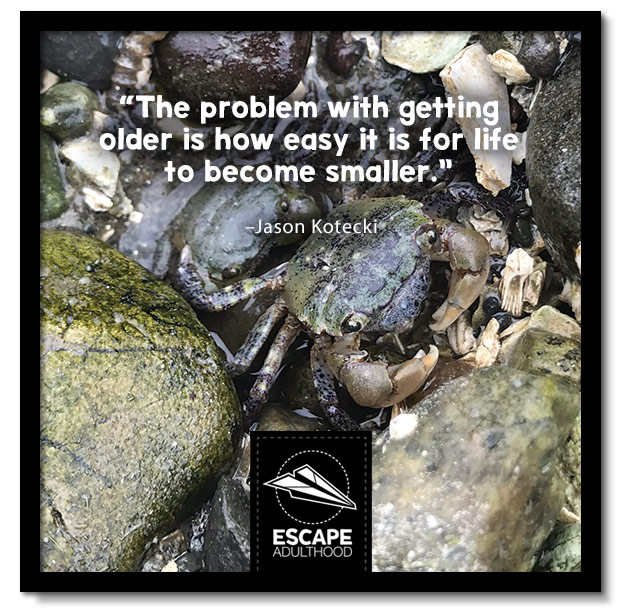
    We were vacationing in the Pacific Northwest, renting a home on Discovery Bay, and the rocky shoreline was covered with a thousand tiny crabs.

    The kids were fascinated by the crabs, and by the fact that the shoreline itself seemed to grow and shrink throughout the day. And it was, because even though it looked like one of the lakes we are accustomed to here in Wisconsin, the bay was connected to the nearby ocean, and the tide was making itself known.

    That led to questions of where the water went when the tide was out, which led to talk of the moon’s gravitational pull, which led to discussions about the phases of the moon, and finally, which moon each of us was born under and what, if anything, that said about us.

    My wife and I were able to answer exactly NONE of these questions on our own. Either we’d never been taught, or more likely, the lessons never stuck because they weren’t relevant to us at the time. Fortunately, Google served as an able guide as we traversed the winding path of discovery.

    This is a small example of a delightful unintended consequence of homeschooling: it has bigified our lives. (All five of us, not just the uneducated common folk we call children.) This adventure of homeschooling has cured me of the belief that learning only happens in a classroom, during certain hours, and on certain days, while requiring a professional on hand who holds a certain degree. That view of learning is so small.

    I am reminded of a quote by Jodi Picoult, who said, “Kids think with their brains cracked wide open; becoming an adult, I’ve decided, is only a slow sewing shut.”

    The problem with getting older, it seems, is how easy it is for life to become smaller. 

    We grown-ups have been around long enough to see how insignificant we are in the grand scheme of things. We’ve had enough of our big dreams deflating that we’ve course-corrected by making them smaller. We seem to be on the lookout for more things to be afraid of. 

    So we become rigid. Stale. Musty. Closed off. Sewn shut.

    We eat the same things, watch the same TV channels, and get our news from the same source. We gravitate toward those who share our opinions and grow ever more skeptical of those who don’t. 

    We see cardboard boxes merely as containers for more exciting things. To a child, they are the most exciting thing of all, a vessel of limitless possibility. Depending on the day, it can be a castle or a pirate ship or a race car or a quiet place to read library books.

    The good news is that you don’t need to homeschool or even have kids to bigify your life.

    How?

    Ask more questions. Try for seventy-eight a day.

    Look for answers. And don’t stop until you find them. If you have a smartphone, you can find any fact in five seconds. (Fact check me on this, but I believe that libraries still give you books for free, as long as you promise to bring them back.)

    Say yes to one thing that scares you a week. 

    Travel. Explore places outside your comfort zone. 

    Try something new on the menu. 

    Prove Netflix wrong and watch something it doesn’t think you would like. Perhaps a documentary about something you know nothing about. Like crabs or tides or moon phases.

    Or, if you’re really brave, ask someone why they are voting for their favorite candidate and – this is the key – don’t try to change their mind. Just listen.

    From our routines to the route we take to work, we stick to the tried and true. We rationalize that we do this because our preferences have served us well, but it’s closer to the truth to say that they keep us comfortable. 

    If we are not careful, our brains will experience a slow sewing shut. Eventually, we get to a point where no new ideas can enter and no new dreams can come forth. 

    This need not be the natural order of things. I have seen ninety-year-olds I can point to as proof. I bet you can too.

    It’s true; we can choose to bigify our lives, making room for all the color, wonder, and joy we can handle. 

    Bigifying our life keeps us young, no matter how old we become. 

  • Regret Prevention 101

    For better or for worse, my to-do list does a bang-up job of keeping me busy. I add to it, celebrate when tasks get crossed off, and stress over the ones that linger too long. It can often feel like I am the servant of my to-do list.

    Adding a layer of regret prevention has helped it to serve me.

    Recently, we were explaining the concept of “decades” to our kids and how we were starting a whole new one. It occurred to me and Kim that when this one is over, we’ll have two teenagers, and Lucy will likely be moved out. Yikes. 

    Meanwhile, I’m still over here clinging to the 1980s and 90s.

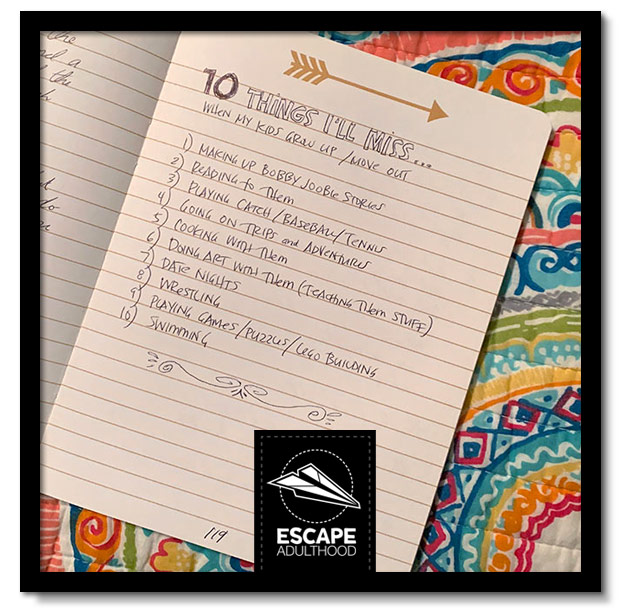
    I was reminded of a list I made a few years ago, one that’s more important to me than my to-do list: 10 Things I’ll Miss When My Kids Grow Up. Before I had children, I dreamed of all the fun things we’d do together. But when you’re in the harried, exhausting thick of it, it’s not hard to let those aspirations slide as you slip into survival mode. And as a fairly ambitious entrepreneur and business owner, it’s just as easy to get caught up in the next product launch, the next initiative for growth, the next line item on my to-do list.

    So I’ve started incorporating these things – the mundane but fun stuff I’d regret not doing more of – into my almighty to-do list. Monthly “date nights” with my kids are automatically scheduled into iCal indefinitely. I have a chart in my Bullet Journal that tracks little monthly goals, like how many chapters of Harry Potter I’ve read with Lucy. They live alongside reminders to file my taxes, update our website, and write the article for next week’s Insider.

    Do I need a reminder on iCal to take my daughter on a date? Apparently, because if I don’t, they don’t seem to happen, at least as often as I’d like.

    I blame Adultitis.

    If we’re honest, most things on our to-do lists aren’t all that urgent or important. It’s just that Adultitis tricks us into believing they are. Meanwhile, it bamboozles us into believing that there will be plenty of quality time for the people we love, you know, later, once a few more of the other “fake-urgent” things are completed. After which – wouldn’t you know it? – three more magically pop up.

    In the meantime, Adultitis is patiently and methodically running out the clock on us.

    We are fooled by the little dopamine hit we get each time we check off another meaningless item from our to-do list. And Adultitis celebrates because we’ve wasted another opportunity to do something that actually matters.

    Maybe you don’t have kids. Maybe your kids are already grown and have kids of their own. Maybe you have regrets about things you wish you had done when you had the chance. No matter. The past is behind us, and there’s nothing we can do to change it.

    Instead, let me ask you this: Who are your favorite people in your life, right now? 

    Make a list of 10 things you like doing with them. Things you’d miss if they were gone.

    Now take that list, a put it somewhere you’ll see it often. Better yet, schedule those things into your regular to-do list. 

    Not only does this make your to-do list serve YOU for a change, it coats it with a powerful layer of regret prevention, and causes Adultitis to weep silently in the corner, where it belongs.