
I’m writing a new book. Or rather, I am redoing an old one. (I shared a little bit about that in this video.)
I spent six days in a very old monastery overlooking the rolling hills of Wisconsin. The kitchen was dark and creepy, but the weather and views were spectacular. I made great progress on establishing the structure and flow of the book, thanks to some help from an unusual source.
One of my favorite aspects of the Catholic faith is the great tradition of the communion of saints. A saint is any person living in Heaven with God, but the Church also designates specific individuals to serve as role models for us here on Earth. These holy men and women, despite their imperfections, give us an example to follow in our own quest to become the best version of ourselves.
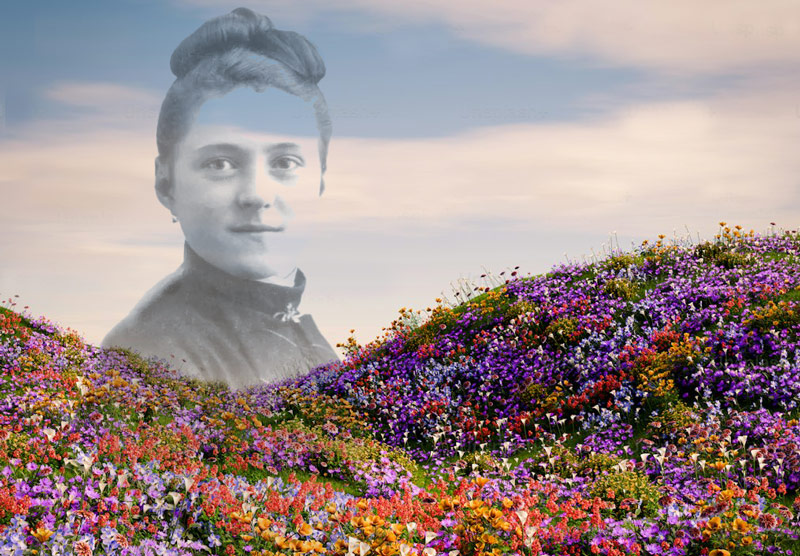
One such saint is a remarkable young woman named Thérèse who lived in France at the end of the 1800s. She died when she was just twenty-four, but left us with writings filled with wisdom beyond her years. Despite near anonymity while alive, she eventually became the most well-known, beloved, and impactful saint of the twentieth century.
I’ve written before on Sheboygan Catholic, my other blog that goes deeper into issues of faith, about the experience of having a saint “friend” me. Well, on my writing retreat, Thérèse made her presence felt, big time.
I suppose it should have come as no surprise. After all, she was a member of the Discalced Carmelite order, the same order that lives on and maintains the property where I was staying. And she is regarded as one of the most childlike of all the saints, which is right in line with our brand and the content of this new book.
She once wrote, “The brilliance of the rose and the whiteness of the lily do not lessen the perfume of the violet or the sweet simplicity of the daisy. I believe that if all the lowly flowers wished to be roses, nature would lose her springtime beauty and the fields would no longer be enameled with lovely hues.”
While in the early stages of developing the book’s foundation, I became very overwhelmed and intimidated. Like any author, I want it to be good, useful, and ideally, life-changing for readers. I look at other books and writers I respect, and it doesn’t take long to feel ill-suited and unworthy for the task at hand.
It’s easy for us to compare ourselves to others and feel overmatched. (I wrote a whole book about it!) Whether you are a teacher, a nurse, an engineer, an athlete, a student, a parent (or frankly, anything else!), there are probably people you look up to. People whose excellence you wish you could emulate, but compared to whom you feel so far inferior. I feel that way about many artists, authors, and speakers I admire (not to mention ALL of the saints!).
They are roses, and we are just humble little daisies.
But Thérèse reminds us that we are all beautiful and have something important to offer the world, our communities, and our families. On my retreat, she reminded me that whatever impact my book will have on the world, it will only do so to the extent that I put all of ME into it. If I try to write a version of the book that I think someone I admire would write, it will fail.
Your clients, your students, your patients, your friends, and your children will not be served by you trying to be some idealized, watered-down version of someone else.
They need you. The best version of you.
The simple, humble version of you, doing small things with great love, is enough.
You are enough.
Roses are lovely. But so are daisies. And daisies are the flowers my wife chose to hold on our wedding day, the 26th anniversary of which we celebrated the day after I returned from my retreat.
I’m happy to say that I made great progress on the book. It’s far from finished, but thanks to my friend Thérèse — also known as The Little Flower — it’s going to be good.
Because it’s back on track to being a book only I can write.
Leave a Reply