Category: Uncategorized

  • Checkmate: What to Do When Your Chessboard Gets Flipped

    Candyland is the worst game ever. It’s generous to even call it a game, for there is no strategy involved. I still cringe thinking about the times my kids begged to play it.

    Of course, although it may feel like a modern-day torture device to torment adults, it was designed for children. It introduces the basics of gameplay: following instructions, taking turns, and counting spaces.

    Eventually, we graduate to a game like checkers, which offers more strategy but is simple enough to pick up in a short amount of time.

    And then there are games like chess, which are infinitely more complicated and reward long-term thinking.

    As we make our way through life — not the game, the real thing — we encounter a similar progression, starting with the basics in childhood and advancing as we grow in knowledge and experience.

    There are times when it feels like you’re playing chess. You’ve got the rules down and are confident in thinking a few steps ahead. You’re making great progress. After a series of strategic thinking and many well-executed moves, you’re starting to feel like a Russian chess master.

    Then all of a sudden, life takes a left turn.

    You lose someone close to you.

    The pregnancy test declares you’ll soon have a new mouth to feed.

    You get downsized and are struggling to find a new job.

    Your doctor just delivered the kind of news no one wants to hear.

    Suddenly, strategy goes out the window. Instead of dominating the board like a Grandmaster, you’re getting triple-jumped and running out of checkers. You’re no longer thinking three steps ahead. It takes everything you have to get out of bed and advance even one space.

    Meanwhile, it’s easy to feel frustrated and resentful to be forced to play a game that seems so basic and beneath you. At least that’s how I felt.

    A few years ago, I was in the midst of a very long, multi-year chess match. Momentum was on my side. I was finally winning. Then a very non-metaphorical storm came along that overturned my chessboard, and with it, my family’s life and finances.

    The season that followed left a dried-up cash flow and a depleted savings account. It felt like I was back in the early days of my business, when our checkbook was always running on fumes and I didn’t know how we’d pay next week’s bills.

    After years of financial success and business growth, this was a huge step backward. We were back in debt at no fault of our own, and here I was, having to get creative to pay bills and worrying about the future. I was angry, frustrated, and resentful. Just as I was finally getting the hang of chess, I found myself back playing checkers.

    Heck, some days felt like I had been banished to Candyland.

    Maybe this describes your current season of life. In situations like these, it seems as though no one can resist telling you what you “should” do. I don’t know your situation, so I can’t offer an opinion about what you should do. But here’s what you shouldn’t do: Keep trying to play that old game.

    Sometimes life doesn’t go the way we expected or hoped. Sometimes there are setbacks. Sometimes it feels like we’re stuck in Molasses Swamp. It’s common to feel resentful about being in the position you’re in, especially if you think you should be somewhere different. I know I did.

    I figured I had two options. I could be all frustrated that I was forced to play checkers. I could shake my fists and throw a tantrum, screaming, “This is not how it’s supposed to be! I am beyond this. I should be playing chess!!!”

    Or.

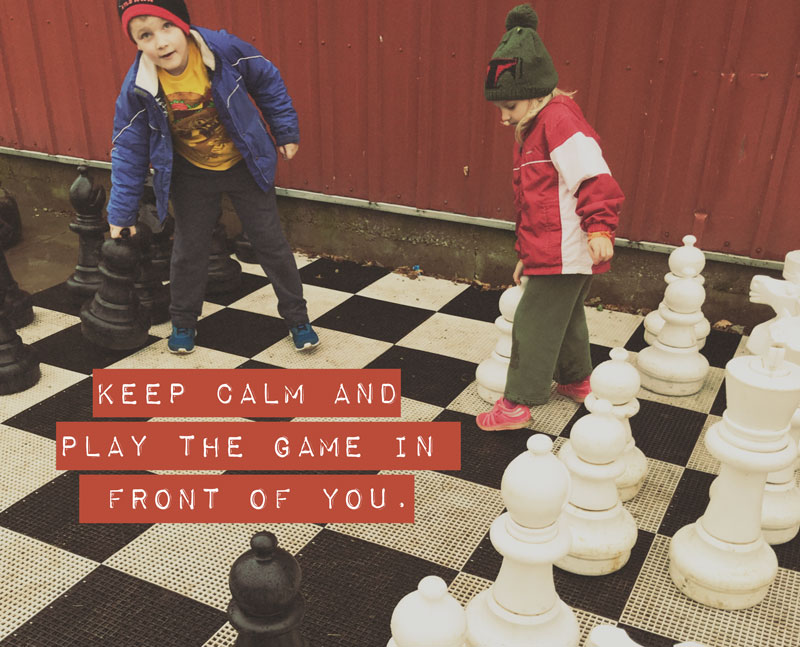
    I could choose to remain calm and play the game in front of me.

    It was obvious that I currently wasn’t winning anything. Being angry that I wasn’t playing chess wasn’t helping me win at checkers. So I let go of my long-term plans and spent a good year getting back to basics, making one uncomplicated move at a time. As our situation improved and the game evolved to allow for more strategy, I found that not only was I finally playing chess again, but I’d become a better chess player.

    If you’re in a season where your chess pieces have been replaced by checkers, remain calm.

    Maybe later you’ll get another chance to play chess, or backgammon, or something else entirely.

    But for now, just play checkers and try to win.


    🤔 I wonder…what game does it feel like you’re playing these days?

  • A Season of Miracles

    The grass in our yard is the faded yellow of a brittle old newspaper. 

    Had I not experienced it happen every year for nearly a half-century, I’d think it ludicrous to suggest that it would somehow come back to life. But soon it will be a vibrant green, and I will be paying some teenager to drive all over it on a tractor to keep it from growing into a jungle.

    Spring is a miracle.

    Unfortunately, like most miracles we encounter in life, we don the proverbial “Been there, seen that, got the t-shirt” t-shirt.

    I remember planting beans in elementary school, pressing them into black potting soil that was packed into a white styrofoam cup. I remember drenching the dirt with water and placing it near a window so the sun could do its mysterious work. I remember waiting, and waiting, and waiting, before eventually giving my attention to something more exciting.

    Then a miracle happened. Unannounced, after God knows how many days, a tiny fleck of color played peekaboo through the dirt.

    Little is more miraculous than the transformation of a humble, unremarkable seed into something green, alive, and beautiful. It starts life in darkness, but it doesn’t stay buried for long. Called to the light, it wills itself upward, pushing out of its false grave. It absorbs the sun’s light and the rain’s refreshment and the soil’s nutrients to transform itself into something different and better than it was before. It delivers on its promise of potential, bringing forth something valuable to the world, in the form of fruit, or shade, or beauty.

    This is the invitation spring offers you as well.

    It’s an opportunity to move toward the light, leaving a dark season you may have been inhabiting. Like a seed, your origins might be humble and unremarkable, but you are given the chance to contribute something special to the world in your own unique way. The world needs what you have to offer.

    Of course, none of this happens all at once. Few worthwhile things do.

    Remember, the crap you’re dealing with can become fertilizer. And results require time, patience, and attentive weeding of the Adultitis that can choke progress. But when all hope seems lost, often then is the precise time that something new bursts forth, and the promise is fulfilled. We may be surprised by its sudden appearance, but progress has been advancing all this time, albeit in hidden and mysterious ways.

    What are you patiently waiting for in your life?

    What weeds do you need to uproot, such as distractions, relationships, routines, or possessions that are no longer serving you?

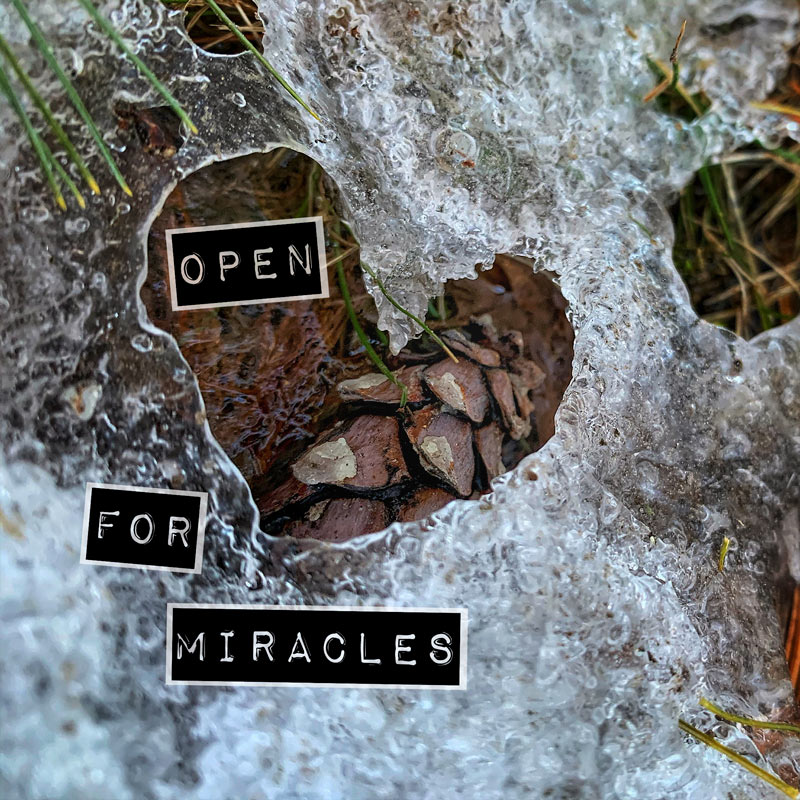
    This week, I invite you to draw your attention to miracles. Miracles that reveal themselves slowly, not with a flourish of flair and showmanship, but in a deliberate unfolding of something no less magical.

    As you watch spring do its thing, and new life bursts forth all around you, may you be reminded of the power of patience and the miracles hidden within you.


    🤔 I wonder…what is something miraculous you’ve noticed lately?

  • From Gold Stars to Gut Checks: Grading What Matters Most

    My dad tells a story from his childhood when he received a report card with less than stellar marks. He didn’t want to show his mom but knew she’d have to sign it before he returned it to his teacher. So he had the bright idea of placing gold foil stars over the offending grades, explaining they were a new sign of stellar performance. Once the signature was secured, he joyfully skipped to school, chucking the carefully peeled-off stars to the wind.

    Years later, when cleaning out Grandma’s things, we found the evidence: an old brittle report card with a few stars still holding on for dear life. It’s unknown how many packages of gold stars Dad went through during his career.

    Apparently, my grandmother was quite gullible. And if you remember the story I told of the altar my father built for our parish priests, you’ll now see that his actions were not always so angelic.

    As we head to the end of the year’s first quarter, I am reminded of report card time, and the version that persists into adulthood: the quarterly performance review.

    For those in almost any work environment, these performance reviews are times for employees to celebrate wins and receive constructive feedback from their employer.

    As our own bosses, Kim and I conduct a big annual review (we recently shared tips on what that looks like with members of the Wonder & Whimsy Society) and do regular check-ins on walks and date nights.

    In some environments, it might feel more like a dog and pony show, but there is a lot of value in taking some time in the midst of any endeavor to reflect on what’s going well and what improvements need to be made.

    But why limit this ritual to our school days and professional lives?

    Consider this: If you asked your kids to give you a report card on how you were doing as a parent, how would you get graded?

    Gulp.

    What if you asked your spouse for a performance review of the last quarter, how would that go?

    It’s easy to laugh off. You probably just wondered if you’d also be able to conduct a review in the other direction…right?

    Or how about an exercise where you gathered three of your best friends to share their appraisal of your friendship?

    Work is an important aspect of life, but nothing, and I mean NOTHING, is more important than our relationships. If there’s value in evaluating how effective we’re being at work, there’s value in seeing how we measure up with the people we care about.

    It’s dangerous to pretend that these reviews aren’t already happening, by the way. Unfortunately, we may not realize it until the feedback comes in the form of divorce papers or a broken, estranged relationship with a child. 

    Don’t wait till it’s too late. Have the courage to ask for an honest performance review from the people closest to you. 

    Here’s one tip I got from author Jack Canfield years ago that can deliver powerful results. First ask, “On a scale of one to ten, how would you rank me as a husband/wife/parent?” If it’s an honest “10,” congrats. Keep doing what you’re doing.

    But it’s probably not. 

    In that case, ask a follow-up, “What would I have to do to earn a ten?”

    Do with the feedback what you will, but there’s a very good chance you’ll receive some actionable insight that will make your relationship stronger.

    And yes, for best results, take it seriously and allow both parties to rate one another. And pay attention to the time and setting. Bringing it up on a busy Saturday while pushing a full cart at Costco is not your best bet. 

    While you might be afraid to hear the answer, you might be surprised how far a few small intentional efforts can go. 

    Is this a fun activity? No. Is it easy? Also, no. Would you rather sign up for a double root canal with a single Kenny G song playing endlessly on repeat? Probably.

    But it doesn’t matter how many accolades you earn at work if you fail at what matters most. While you can hope you’re performing better than you probably are, working to improve your relationships is always worth it.

    You might not score a perfect 10, but who knows? Maybe you’ll earn a gold star.

  • Caught Not Taught

    Teaching is overrated.

    Oh, did that get your attention?

    Good. Now let me tell you what I mean. As parents who homeschool, Kim and I have thought a lot about our role as teachers. And I’ve been fortunate to speak to thousands of educators over the years, encouraging them in a job that’s become more difficult with each passing year.

    I don’t think that teachers are overrated, just one particular part of their job.

    The teaching part.

    I’ve made many observations over many years as a homeschooling parent. It’s clear to me that kids have no trouble learning. It’s a built-in feature. After all, you don’t have to teach a baby to crawl, talk, or walk.

    And when they get older, they somehow figure out all on their own exactly what buttons to push to get what they want!

    Look, I believe that a person who takes on the role of teacher in any child’s life is one of the best kinds of people. It’s just that the idea of imparting knowledge to someone else is not as useful as we might think.

    Our schools may be helpful in imparting facts. But learning, in the final analysis, means a change in behavior.

    Since so much of school feels boring and irrelevant, students put on a lid, closing themselves off from real learning. You can pour all the knowledge you’d like on a student, but if they’re going through life with a lid on, you’re not going to be very effective.

    A teacher’s true, most important, (and most difficult!) job is getting the student to remove the lid. 

    Part of the reason school feels boring is that the teacher is bored.

    One of my favorite teachers ever was Mr. Newland. He was a balding, middle-aged middle school teacher with giant glasses and a bigger smile. He had a downright nerdy love of history and his passion for stamp collecting. Stamp collecting! His enthusiasm was contagious. It bordered on embarrassing, but it made history come alive and piqued my curiosity. Only then was I willing to remove my lid and take in the knowledge he was trying to impart.

    Children need adults like this, people who do are doing what they love.

    Fred Rogers agreed when he said, “If adults can show what they love in front of kids, there’ll be some child who says, ‘I’d like to be like that!’ or ‘I’d like to do that!’” He told a story about a sculptor in a nursery school he was working in when he was getting his master’s degree in child development:

    “There was a man who would come every week to sculpt in front of the kids. The director said, “I don’t want you to teach sculpting, I want you to do what you do and love it in front of the children.” During that year, clay was never used more imaginatively, before or after…. A great gift of any adult to a child, it seems to me, is to love what you do in front of the child. I mean, if you love to bicycle, if you love to repair things, do that in front of the children. Let them catch the attitude that that’s fun. Because you know, attitudes are caught, not taught.”

    Attitudes are caught, not taught.

    My appreciation for history and geography was caught from Mr. Newland, not taught by him.

    Think back to your favorite teachers or coaches. Is it not true that every single one of them loved what they were “teaching?”

    How many people do you know who love what they do?

    This rare quality can turn anyone into a teacher, whether you have an education degree or not.

    Kim and I have shared a love for learning, reading, traveling, making, and building with our kids. Not on purpose, necessarily, but because we love these things ourselves.

    Along the way, they have watched us build a business, a movement, and a community, because we did it right in front of them. Who knows how that will serve them? I don’t. But I do know they are learning from it.

    We are on the same page as artist Kelly Rae Roberts, who said:

    “Not only does living our dreams give our family and children permission to do the same, but it also creates an energy in the family – we’re happier, more inspired, more energized. By the same token, I think it’s important for our children to witness us taking risks and reaching toward our potential. How will they ever do the same if their mamas and papas haven’t shown them it’s possible by living that very possibility into reality with their own lives?”

    Teaching is a tough gig. But the hard part has nothing to do with dispensing facts.

    Dream big. Take risks. Do what you love in front of others.

    May we ALL be teachers.

  • In Pursuit of Greatness

    Ron Swanson, Timothée Chalamet, and my dad walked into a bar.

    Out came this article.

    Let’s start with Mr. Chalamet, the brilliant young actor who received a Screen Actors Guild award for his portrayal of Bob Dylan in A Complete Unknown. His acceptance speech caused a stir, not because it was controversial, but because it was so uncommon:

    “I know the classiest thing would be to downplay the effort that went into this role and how much this means to me, but the truth is this was five years of my life. I poured everything I had into playing this incomparable artist, Mr. Bob Dylan, a true American hero. It was the honor of a lifetime playing him…

    …I can’t downplay the significance of this award. Cause it means the most to me. And I know we’re in a subjective business, but the truth is, I’m really in pursuit of greatness. I know people don’t usually talk like that, but I want to be one of the greats. I’m inspired by the greats. I’m inspired by the greats here tonight. I’m as inspired by Daniel Day-Lewis, Marlon Brando, and Viola Davis as I am by Michael Jordan, Michael Phelps, and I want to be up there. So I’m deeply grateful. This doesn’t signify that, but it’s a little more fuel. It’s a little more ammo to keep going. Thank you so much.”

    We’re not used to people admitting that they want to be great.

    I appreciate the honesty and drive. Some might see it as prideful, but he demonstrated tons of humility. Not just by acknowledging the greats who came before him, and not just by describing the award as fuel to keep going, acknowledging that he still has a long way to go. 

    Pride is acting like you deserved the award and that it came easily. It takes humility to display the vulnerability of letting us know how much you care. And when you plant your flag as someone who desires to be great, you invite the entire world to remind you why you’re not.

    These days, it’s not cool to admit that you care or show how much effort you put in.

    These days, apathy is seen as a virtue.

    It’s not.

    Magnanimity, on the other hand, is a virtue. It means “greatness of soul.” It is the virtue by which one pursues what is great and honorable in life, even if it is difficult. The magnanimous person seeks to do great acts that are deserving of honor.

    The opposite, I’m afraid, is more of what we commonly see in our culture today.

    It’s not cool to try too hard.

    The person lacking in magnanimity suffers from a vice called “pusillanimity,” which means “smallness of soul.” The pusillanimous individual shies away from noble, arduous tasks because they are uncomfortable and will demand a lot out of him. He instead pursues the path of least resistance, opting for whatever is easier. (Hat tip to St. Thomas Aquinas and Edward Sri for their insights on this.)

    The path of least resistance is always tempting.

    It’s easy to settle for good enough.

    Greatness is hard.

    Of course, greatness and magnanimity are not exclusive to the realms of sports and entertainment. We are called to pursue greatness wherever we find ourselves, even if it’s unlikely to earn us an award or even be noticed at all.

    Our family is helping our parish priests convert a spare room in the rectory into a prayer chapel. My dad built the altar for them to use when praying Mass. He put a lot of hours into it, and triumphantly texted me when it was finished.

    A few days later, I received another text. This one wasn’t so triumphant. Apparently, he determined that the top was warped, and he deemed it unacceptable.

    I didn’t see much evidence of the problem in the photo, but he was convinced it needed to be better and decided to redo it.

    Ultimately, my dad redid the top of the altar twice. When he sent me a photo of the finally completed masterpiece, he added these thoughts:

    “One thing that I have learned about woodworking: there is a reason for everything. It seems like whenever I face a challenge, mistake, or problem, it always turns out I’ve learned something that helps me somehow down the road. And in the end, I become a better me.”

    My dad doesn’t have a blog, but he’s been toying for years with writing a book. Until he does, I guess it’s up to me to pass along gems like these.

    Because of course, this isn’t just a lesson about woodworking.

    It’s a lesson about life.

    That’s the result of pursuing greatness, even if you don’t quite reach it: You end up with a better you.

    How do you achieve greatness?

    Well, it won’t come easily or comfortably, that’s for sure. A strong work ethic appears to be on the endangered list these days. We live in an age of “good enough,” which rarely is.

    And it’s not by being sidetracked and distracted by a bunch of other things. Chalamet dedicated five years to his portrayal of Bob Dylan. Likewise, my dad put all other projects he was eager to get to on the back burner to focus on the altar.

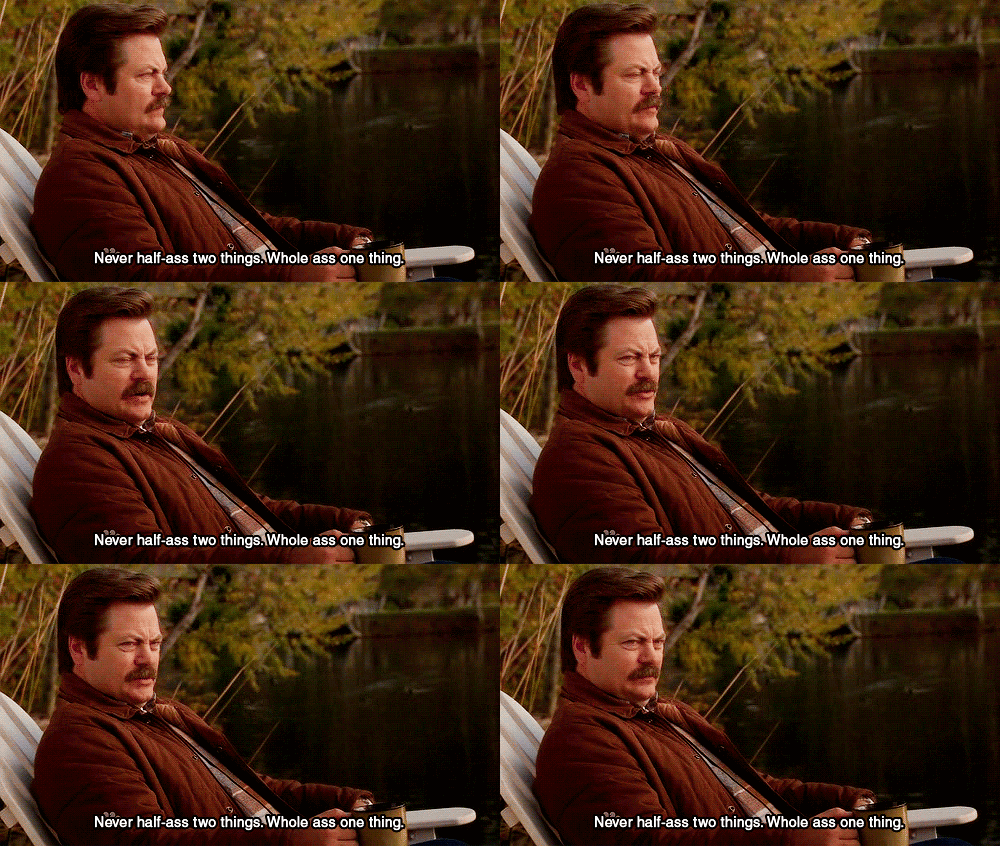
    As Ron Swanson said, “Never half-ass two things. Whole-ass one thing.”

    Good advice.

    But the first step to achieving greatness is to decide to be great because you’re grateful for all the gifts you’ve been given and you strive to use them the best that you can.

    To do any less is a tragic waste of time.

    We were not created for comfort but for greatness.

  • One Piece at a Time

    The time between Christmas and the New Year is Puzzle Season in our household. (Except for my wife, who is not the least bit interested in them, but is eager to take advantage of the fact that we are all distracted.)

    The kids and I usually enjoy the 1000-piece varieties, but hate the unnecessarily hard ones. (All double-sided puzzles, or those made entirely of pieces that are mostly one color, should be rounded up and incinerated.) 

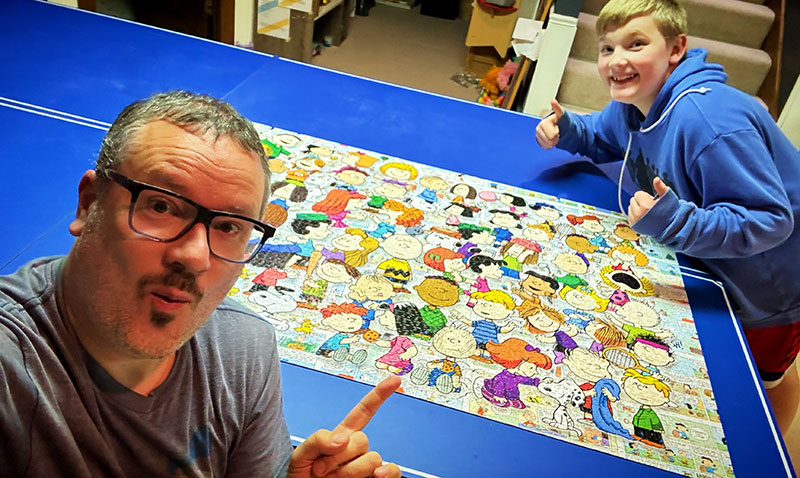
    Our biggest accomplishment thus far was a 3,000-piece behemoth that featured Peanuts characters. 

    At first I thought, “This is totally doable. Not too difficult.”

    Reality set in when we started sorting all the pieces, putting them face-up. To have space for them all, we had to shift our operation to the ping-pong table. Ginny had the idea to set aside the edges as we found them, which turned out to be a stroke of genius. But that too was sobering, taking way longer than I expected.

    Everyone contributed — except Kim — but eventually, Ben and I signed up for the bulk of the job. 

    We would scale Everest or die trying.

    There were times I never thought we’d make it. I reminded myself, one piece at a time, knowing that every piece added successfully was one less to sort through. 

    Sometimes I got delightfully lost in the quest. I was in the zone, and hours passed like minutes. Other times I was frustrated, going half an hour having placed only a few pieces.

    When I was away from the puzzle, my subconscious would conjure up a strategy to try the next time I returned. (Look for everything of a certain color. Group all the like pieces together. Work on all seven hundred Snoopys separately before adding them to the larger puzzle.

    Eventually, we finished it. We were older, wiser, and furious at Charles Schulz for creating so many characters whose faces are so dang similar.

    I also came away with some helpful lessons (reminders?) for any of us who are in the midst of an overwhelming endeavor:

    • At the beginning, a project always seems easier than it will be. (I can see the top of that mountain from here; how hard can it be to walk up there?) Perhaps this is for the best, or else we may never get started. Nevertheless, it’s a good truth to keep in mind to help ward off the inevitable discouragement that will come.

    • We should listen to and be open to the ideas of others, even people who are younger or less experienced than us. They may have suggestions that could help us greatly. (Thanks, Ginny!)

    • There are times when everything is clicking: You’re in the zone. You’re having fun, and it’s easy. Roll with it, as long as you can. This rarely happens early in the process. It’s often a reward for putting in the hours.

    • There will be a point where the task becomes overwhelming and looks unfinishable. In those moments, remind yourself to take one step at a time. It’s simple math: Each step taken is one less step to take.

    • Working harder isn’t always the answer. Sometimes we need to get away from what we’re working on. Take a walk. Do something else for a while. Forcing it only leads to frustration, and our subconscious will work on the puzzle while we are away, giving us ideas and strategies we wouldn’t have otherwise considered.

    Perhaps you are in the middle of a 3000-piece puzzle in your life, one that isn’t made of colorful paper and cardboard. 

    I wish you well and hope one of these reminders sustains you on your quest. 

    You’ve got this!

    Just take it one piece at a time.
  • Today or Never

    “Today or never, that’s my motto.”

    Now that’s a good motto. Thanks for that, Mary Poppins.

    Looking back at the last year, I lived a lot of it scared.

    The after-effects of the storm that ripped through our property two years earlier lingered longer than I expected. The debt was a leviathan, and we slayed it sooner than seemed possible.

    Maybe too soon.

    The finances didn’t snap back the way I thought they would after we moved heaven and earth to exorcise that beast.

    Maybe it was the lousy economy. Maybe it was the uncertainty of an election year. Maybe we were just exhausted.

    Maybe a little of all three.

    Or maybe our number was up.

    That’s what I was most afraid of.

    Can you be faithful and fearful at the same time? If it can be done, I did it. I fought that fear every day, and I like to think that more days than not, faith won.

    The maddening thing was that we were making more than we ever did in that dumpy apartment all those years ago. But there are more mouths to feed now. More responsibilities. More people to answer to.

    Every week I wondered if this was the week the tank would finally run dry.

    Well, despite the cliches, January has a way of begging for something better.

    It was the last day of our annual retreat. It’s when the kids are at Grandma and Grandpa’s, the home is all ours, and we review the year that was and all the blessings that make me blush when we count them all up.

    My bride and I went for a walk. I floated a topic. It wasn’t an abandonment of sanity. I wasn’t resorting to recklessness. But I did confess to Kim that I didn’t want to keep livin’ scared.

    Our family has prayed for a whole year for the opportunity to embark on adventures to Alaska, Africa, Italy, and London. (What can I say, we’re an eclectic bunch.)

    A whole year and none of them felt any closer to reality.

    And yet.

    I reminded Kim that Alaska is a place you only want to visit in the summer and although it’s far, it’s not jumping oceans far. If we didn’t try it this year, it would be another whole year before we could try again. And our kids would be that much closer to leaving the nest.

    Another year of staycations felt like a defeat.

    I don’t know how it happened…one thing led to another. A miraculous void in an already crammed calendar was found. We discovered flights that could be had for miles and a song.

    It all happened so fast.

    It was reminiscent of another quote from Madam Poppins, which has been lingering in my notebook for damn near seven years:

    “We’re on the brink of an adventure, children, don’t spoil it by asking too many questions.”

    My wife and I are not prone to flights of financial fancy. One reason we live in our dream house is that we saved and sacrificed and sweltered through hot, air-conditionless summers in that dumpy apartment on the run-down side of town.

    Yes. This could indeed end up being a bad financial decision I’ll soon regret.

    It could also be true that I won’t make it another three sixty-five.

    “Today or never, that’s my motto.”

    We got to tell our kids last night.

    We’re going to Alaska.

  • Do You Ever Feel Invisible?

    The sun has disappeared.

    Stolen, perhaps. Or maybe it’s sleeping, on vacation, or vanished into thin air.

    Not really, of course, because its morning light enables me to clearly see everything in my backyard.

    And yet, I cannot see the sun, the source of the light. I can’t even tell where it might be, because it is hidden by such a dense layer of fog that I can barely see the lake beyond the yard.

    I take it as a good reminder for those times when I wonder how much of a difference I am making. It never seems to be as much as I’d like. But maybe the light I put into the world has a bigger reach than I can imagine, even though the source is hidden.

    Maybe a print of mine hangs on a wall somewhere, constantly reminding its owner of a story I shared that meant something to them.

    And maybe the constant exposure to that art inspires that person — perhaps even subconsciously — to act on the moral of that story in a manner that improves their situation, heals a relationship, or makes an unforgettable memory with someone they love.

    Any people on the receiving end of that action would have no idea where the original spark came from. They’d probably never guess that it began years ago at an event when someone heard a speaker who struck a chord and decided to buy some art as a souvenir.

    Meanwhile, it’s not required for the art owner to acknowledge or even remember my role in the chain of events for the light I shared way back when to have made a difference.

    Just like I don’t have to see the sun to prove its impact.

    What’s true about the sun is true about me, and it’s true about you as well.

    You may never see the impact of all the light you are sharing in this dark world. You may not receive the warm feelings of a standing ovation or a thank you note for a job well done. You may never get the credit you deserve on this side of eternity.

    The difference you make may be invisible.

    Keep shining anyway. ☀️

    Your light still makes a difference, even if you can’t see it.


    🤔 I wonder…do you have an example of a time you made a difference in someone’s life but only found out years later?

  • A Deluge of Awesome

    Something awesome happened to you yesterday.

    Did you notice it?

    Perhaps something epic immediately comes to mind, causing you to think, “Omigosh, how did he know?!”

    More likely, it was something a little less epic, but no less awesome. But it may have been overshadowed by an emergency that popped up. Or you might have been distracted by something else that didn’t turn out quite how you’d hoped.

    Earlier this year, we hosted a secret meeting of the Wonder & Whimsy Society. We discussed “awesome things” under the premise that we need to be reminded of awesome things to help counter the deluge of negativity that so often rains down from the news and our social media feeds.

    I took a cue from the book 1000 Awesome Things and generated my own list. I thought I’d share them here, with a few extras that came from fellow members…

    Anticipating something you’re excited about.

    Finding yummy leftovers in the fridge that you forgot you had.

    Watching movie previews at the theater.

    Waking up before your alarm and realizing you have an extra hour to sleep.

    The very first bite of anything delicious.

    The point of a concert when everyone is singing together.

    When a repair bill is way less than you feared.

    Making the last payment on a loan.

    High-fiving a stranger at a sporting event.

    When it’s raining on a morning you get to sleep in.

    I’ll admit that it took a little effort to generate a list like this in a world where examples of why life is not-so-awesome are so easy to come by. But here’s the weird thing: The simple act of generating these ideas, and then sharing them later, uplifted my spirit.

    Most of these occasions cannot be conjured up at will, which is part of what makes them so precious. They are also pretty fleeting, and if they are even noticed at all, are usually forgotten in a week. (This is where my habit of recording my happiest moment each day comes in handy.)

    I can’t claim that one of the items on my list happened to you yesterday. But maybe just reading them sparked a memory that made you smile. And I’ll bet anything that something else worthy of being on this list did.

    If you need proof of why the world is not so awesome, watch the news.

    If you want a deluge of examples of why your life IS awesome, turn it off and pay attention.


    🤔 I wonder…what is something awesome that happened to you yesterday?

  • Are You Living a Lie?

    Kim and I recently realized we’ve been living a lie.

    Allow me to explain.

    Being close to water has always been high on our list of values. We dreamed of living on a lake since our earliest days together. When we lived in Madison and worked toward that goal, we spent a lot of time enjoying the four lakes that embraced the city. When we went on vacation, we faithfully followed a rule: make a point to get a place on the water.

    Well, we recently spent a long weekend in Door County, and once we cleared space on the calendar, the next step was securing lodging. Naturally, Kim’s knee-jerk reaction was to start looking for a place on the water.

    But then we talked about it. Now that we are fortunate to live on a lake and can enjoy campfires in our own backyard, the importance of renting a place on the water is no longer a high priority.

    We realized we were operating with a premise that was no longer true.

    Are you currently making choices based on something that used to be true, but is no longer?

    Is a goal that drove you in your twenties a little less important now that you have a family, or feels a little less interesting now that you’ve explored it a bit?

    Are you spending time or money maintaining something useful ten years ago when the kids were younger, but now no longer need it?

    Are you still abiding by a preference that mattered a lot to someone who is no longer in your life?

    Are you still volunteering with an organization that no longer aligns with your values or requires more time than you can give in this season of your life?

    Does your business still serve a demographic that is no longer a good fit for the current strengths and solutions you offer?

    If you answered yes to any of these questions, hear this: it doesn’t mean that your original decisions were wrong. Seasons change. We learn and grow and evolve. We are allowed to change our minds, especially when circumstances change.

    In fact, we should.

    But we often hold on too long, wasting time and resources on something that is no longer serving us.

    Why do we do this?

    Sometimes it’s hard to say goodbye to happy seasons of life.

    Sometimes it’s hard to move beyond the sunk costs of time, energy, and money we’ve invested.

    Sometimes it’s just a habit or routine that’s become a rut because it hasn’t been evaluated in a while.

    That was the case for me and Kim.

    Realizing that renting a place on the water wasn’t as important gave us more options for lodging that could work, which, not surprisingly, were way more affordable. (Which is good, because the cost of feeding our clan is now much more expensive!)

    Granted, our example is pretty pedestrian in the grand scheme of things.

    But in any case, the cost of living a lie is always more expensive.


    🤔 I wonder…are you making any choices based on something that used to be true but no longer is?