Author: Jason

  • Shiny Objects and Our Search for Meaning

    They don’t make Super Bowl rings like they used to.

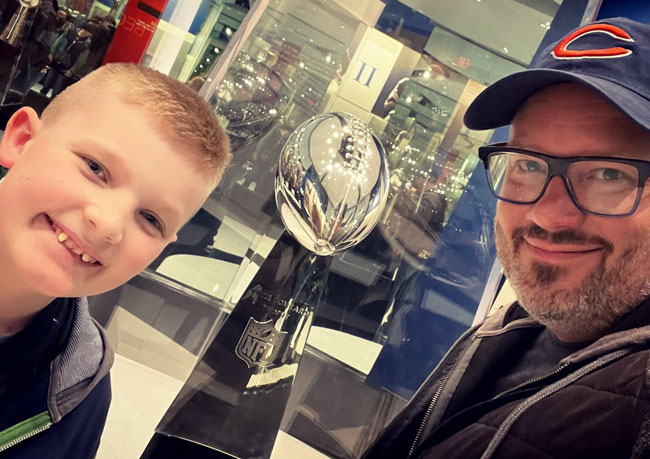
    A recent speaking engagement in Ohio provided me the opportunity to take my son Ben along for a side trip to Canton, home of the Pro Football Hall of Fame. One of the standout displays was its collection of Super Bowl rings.

    You can see and compare every ring, from the first commemorating the Green Bay Packers’ victory in Super Bowl I, to the one awarded to the LA Rams for winning Super Bowl LVI. 

    The recent versions look less like rings and more like diamond-encrusted paperweights.

    The Super Bowl LVI ring is shaped like the stadium, with removable(!) elements that reveal intricate details like the roof, the Infinity Screen, and the field, which is colored with remnants of the actual turf where the game was played. Each ring includes about 20 carats of white diamonds in total, the most of any sports championship ring in history.

    Meanwhile, the first Super Bowl ring, designed by Vince Lombardi in 1966, was a one-carat diamond set in white gold.

    It was striking to see so many life lessons crammed into one compact display.

    For one, I think it’s safe to say the NFL is doing very well, especially compared to the humble founding days when owners were required to pay a $100 league entry fee. But while some might see an opportunity for a sermon on greed or the ills of capitalism, I choose to see it as an invitation to consider the progress we’ve made in our own lives. Some of my dreams are still a far way off, but I am grateful when I think about how far Kim and I have come from the early days of our marriage, with our air-conditionless apartment and a steady diet of Hamburger Helper.

    Of course, each Super Bowl ring was indeed bigger and more valuable than the one that preceded it. Apparently, we human beings just can’t keep from comparing ourselves to others and trying to one-up each other. 

    Also, it’s clear we have a thing for chasing shiny objects. Sometimes they look like rings and trophies. Other times, they look like homes, cars, job titles, and reserved parking spots. The fact that sometimes those Super Bowl rings get pawned reminds me that those shiny objects don’t lead to lasting happiness or solve all our problems.

    It was an interesting display, but also a sad commentary on how out of whack our priorities are. If you follow the pattern, there’s a good chance that by 2050, players will be parking their Super Bowl “rings” in their garage.

    I am not optimistic that our culture will change much by then.

    But maybe we can.

    We can change for the better if we spend more time being grateful for how far we’ve come and take a few moments to ask some honest questions. 

    Does what I’m currently chasing after hold true value, or is it merely a “shiny object” I can’t take with me?

    Am I more focused on beating someone else or besting the person I was yesterday?

    In our fast-paced culture, it’s uncommon for someone to step off the treadmill long enough to ask hard questions like these.

    But then again, that’s what makes real champions.

  • Everyone Needs an Angel in Their Corner

    Art by Virginia Rose Kotecki.

    We offered my daughter a chance to make a million dollars and she turned it down.

    OK, “millions” might be stretching it, but adjusted for the economy of childhood, one could make a strong case.

    Here’s the story: Virginia Rose drew a picture of an angel for her grandfather during his last days. He displayed it prominently in the hospital and at the hospice center, and it seemed to deeply move everyone who saw it. It became a source of great joy and comfort for him, and he requested that it be placed in his casket at the time of his burial.

    A copy made its way to a wall in our kitchen, and Kim and I continued to marvel at its magnetic quality. It inspired us to offer Ginny a unique opportunity. We asked her if we could sell it on our website as a Mini*Print. Our only request was that she donate some of the funds to a charitable cause, but it was up to her to decide on the charity and how much to keep for herself. 

    But a few days later, Ginny approached Kim in tears. After some prompting, she revealed that she didn’t want to sell the artwork; that it was Papa’s angel and a gift meant just for him. 

    We tried to paint a full picture for her, that maybe Papa would be happy to see her inspire so many others and that perhaps the charity she picked could go to a cause he would have cared about. But in the end, she was resolute.

    Although we could overrule her decision, we’ve decided to honor her wishes. Perhaps she will change her mind in the future, but for now, “Ro’s Angel” is not for sale. 

    Frankly, it’s not a choice I would’ve made. But I’m proud of Ginny. It takes a strong person to live by their convictions and chart their own path. Kim and I see it as our job to support her on that journey, even if it’s different than the one we’d choose for her.

    In a small way, it reminds me of how my parents must have felt when I told them I wanted to pursue a career in art. I was a well-rounded A student; I could have taken any number of more stable and profitable paths. I am sure they were uncertain about my decision and worried about my future. But they supported me every step of the way. Even in the early lean days when things weren’t going especially well, they never once said, “Well you tried, maybe now it’s time to think about getting a real job.”

    Unfortunately, not every kid is given this gift. Recently, I’ve witnessed a number of parents of high school students demean and discourage their children’s dreams, some right in front of them. These are very talented kids, with real aptitude in their area of interest. And yet the very people who could serve as the wind in the sails they’ll need to make their dreams come true are demanding they pursue a more “traditional” path.

    And look, I get it. Sometimes the cockamamie plans they come up with are bat-guano crazy flights of fancy.

    However.

    Job number one is to affirm their original vision, no matter how insane it may seem. Love them enough to give them the runway they need to let life school them in lessons of practicality. (Trust me, it won’t need your help for that.) The odds are quite good that where they end up will be very different from their original crazy vision, but please hear this: that initial naive, unrealistic, cray-cray vision is crucial. If you snuff that out at the start, it will never have the time to mature into the unique path they were created for.

    When we care about someone, it’s normal to want them to make choices that ensure their safety and well-being. We want what’s best for them. 

    But it’s hard for me to believe that anyone would want a miserable future for their child that may include a full bank account but also leaves them trapped in a life they never wanted, tormented by resentment and regret. That’s exactly what you get when you extinguish their dream before it’s had a chance to mature.

    We may share some DNA with our children, but they are not us. They are their own glorious gumbo of strengths and weaknesses, interests, and desires. Who knows for what purpose God created my child? The world may have been waiting centuries for this specific recipe; far be it for me to stand in the way.

    It’s hard to to embrace something you don’t understand, and to approve a path you wouldn’t have chosen for yourself. Unfamiliar with the art world, my parents were willing to invite an expert (my high school art teacher) over for dinner to confirm whether or not I was actually any good, and if there was a legitimate path that could lead to me not living with them when I was forty.

    Without that leap of faith and vote of confidence (thanks for the assist, Mrs. Garrett!), I’m sure I wouldn’t be where I am today.

    I suspect my parents are at least a little surprised by how my life has turned out. In fact, it’s quite a departure from my own original vision. It’s even better. 

    I never would have gotten here had they not loved me enough to chart my own path.

    Whether you are a parent or not, I bet you have some young people in your life who are figuring out what to do next.

    Be a good angel on their shoulder, cheering them on to great heights.

    They may turn down millions, but you can help them build a life that’s worth even more.

  • Because You Said So

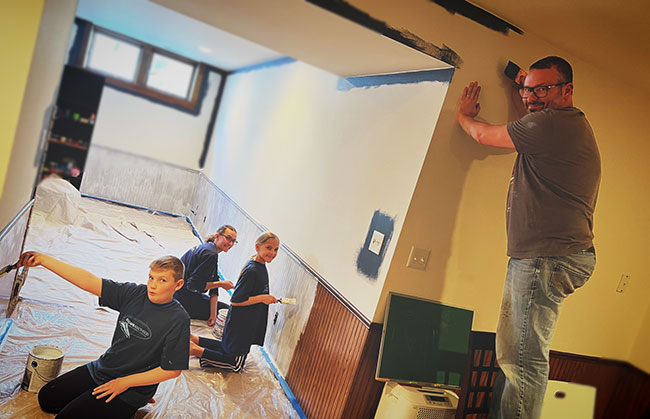
    We recently renovated the rec room in our basement. The transformation mostly consisted of several gallons of paint and some key new decor purchases. In the past, I would have been tasked with the paint job, but this time, we decided to make it a family affair. It was a great idea, mostly because I’d still be working on it — the bead board required four coats alone — but also because it gave us a shared sense of accomplishment and excitement for the finished product.

    The kids weren’t token helpers, either. I managed the trim, but they were involved in everything else. 

    Lucy is fourteen years old and rides and cares for horses. She can direct a 2,000-pound animal with ease. My eleven-year-old son Ben can make a loaf of banana bread from scratch without any guidance.  Nine-year-old Ginny recently designed, measured, cut, and sewed a new kitchen apron all by herself, complete with a Bluey patterned pocket. 

    It’s not magic. My kids are talented and capable, but so is every child who hasn’t been limited by low expectations. One of the hallmarks of our homeschooling philosophy is the belief that kids are capable of way more than society gives them credit for.  

    The default mode of Western culture has children being talked down to and underestimated. We act as if they are idiots until they get out of school. Rather than give them reasons for our decisions (if we even know them ourselves), we say, “Because I said so.”

    “Because I said so.”

    It’s a phrase designed to end the argument, serving as the last word for the person in power. 

    The thing is, kids are the only people we underestimate. We underestimate ourselves, too, with that very phrase limiting our own potential.

    “I could never do that,” is the stock reply anytime the dreamer within us imagines accomplishing something cool, or a friend suggests making a change that would improve our life. 

    I can’t learn that skill. I can’t get that degree now. I can’t handle a transition that bold.

    Yes, actually, you can. 

    But do you know the main reason you think you can’t? 

    Because you said so. 

    You’re the person in power. You told yourself it’s not possible, so it isn’t. End of argument. Ultimately, your opinion is the only one that matters. 

    Of course, it may be daunting. Difficult. Scary. It might cause you to feel uncomfortable or risk embarrassment. But none of those things make it impossible. 

    Rather than telling yourself you can’t do something that might feel overwhelming, at least be honest with yourself. The truth is, you’ve simply decided you don’t want to, maybe for reasons you don’t want to admit or perhaps haven’t even thought about.

    We usually get from our kids what we expect of them.

    The same thing is true of ourselves.

    This isn’t magical “all you have to do is think positive” nonsense. You still have to do the work. But believing something is possible is always the first step toward making it happen. When it comes to your life, you are the one in control. You hold all the cards.

    If you think you’re stuck in a bad situation and there’s no hope for your future, you’re right.

    If you believe you can go from where you are now to where you want to be, you’re right.

    If you believe you are capable of great and amazing things, you’re right. 

    How do I know?

    Because you said so.
  • Your Life as a Goonie

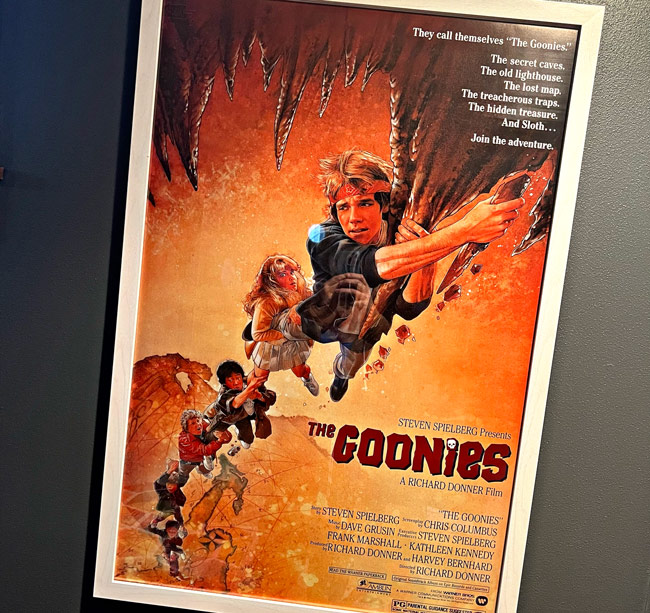
    My family watched The Goonies recently. I’ve probably seen it a dozen times, as it was a favorite from my childhood. 

    If you haven’t seen it, Wikipedia offers this summary: 

    “The Goonies is a 1985 American adventure comedy film co-produced and directed by Richard Donner from a screenplay by Chris Columbus, and based on a story by Steven Spielberg. In the film, a group of kids who live in the ‘Goon Docks’ neighborhood of Astoria, Oregon, attempt to save their homes from foreclosure and, in doing so, they discover an old treasure map that takes them on an adventure to unearth the long-lost fortune of One-Eyed Willy, a legendary 17th-century pirate. During the adventure, they are chased by a family of criminals who want the treasure for themselves.”

    To put it simply, it’s just fun. 

    Watching it again now, as an adult, I marvel at how Spielberg had a knack for knowing what kids love. For instance, early in the movie, we see an elaborate Rube Goldberg-type contraption that the kids built, incorporating a bowling ball, a sprinkler, and a chicken laying an egg. It served the sole purpose of opening the front gate for visitors. I don’t think the plot would have fallen apart without that scene; all I know is that I loved it as a kid. 

    And I suspect Spielberg knew I would.  

    And that’s just one example. The movie has pirates and treasures and a pretty girl. A monster. A cool kid who can flummox authority with his mouth. There’s a mysterious riddle-filled treasure map, and of course, danger and adventure. 

    Epic.

    I wanted to be a Goonie when I grew up. I bet you did, too, if you saw the movie as a child. (Or would have if you didn’t.)

    So…how are we doing?

    For example, Goonies never say die. How often do we give up at the first sign of resistance? Or decide not to begin at all because we deem it “impractical” or don’t want to look foolish if we fail?

    Is our life filled with adventure, or is it always the same, one slow, predictable workweek at a time?

    Does it have a measure of danger, or are we striving instead for comfort and ease?

    How quickly are we to abandon the mystery of a treasure map for the certainty of turn-by-turn directions?

    Are we searching for real treasure, or are we chasing shiny objects and settling for the wrong things?

    When we encounter a “monster” who is different from us, do we judge them quickly and write them off before we’ve had the chance to encounter a real friend hidden within?

    Finally, back to the gate-opening contraption in the movie’s first act. Machines like that are wildly inefficient in their assigned objective, but exceptionally proficient at delivering delight and wonder. It’s really a metaphor for anything that adds fun and whimsy to life.  Are we too focused on trying to make everything in our purview as efficient as possible, removing all the fun in the process?

    With Goonies, Spielberg made a movie he knew kids would love, one in which the kids are heroes and the adults are either villains or clueless.

    But maybe he also made it for adults, to stir that long-lost child within us, to remind us that we once saw life as a great adventure and that it can be again.

    When we were kids, we were all Goonies.

    Adultitis may have the upper hand in your life right now, but Goonies never say die.

  • The Opposite of the Right Way Isn’t Always Wrong

    Rules that don’t exist could be regarded as lies, because sometimes they are.

    Thou shalt hate Monday.
    Thou shalt wait thirty minutes to swim after eating.
    Thou shalt not celebrate without thine calendar’s permission.

    Lies, all lies.

    In the art world, there is a rule that states, “Thou shalt stick to one style.” To find success as an artist, the thinking goes, you should stick to one identifiable visual style. That’s because you can get more traction, more quickly, if it’s easier for people to remember you and recognize your work. 

    As a rule, it’s true. 

    But just because a rule is true doesn’t mean you have to follow it.

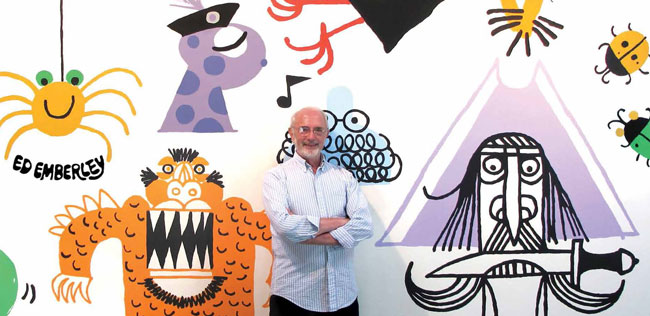
    Consider Ed Emberley. I loved his drawing books growing up and constantly borrowed them from the library when I was a kid. With his alphabet of simple marks, you could draw animals and monsters and entire cities and worlds. It was only as an adult that I realized he was a real guy. I always wondered if Ed Emberley was a made-up name, like Betty Crocker or Uncle Ben or Ha Ha Clinton-Dix. (Fun fact: that last one’s real.)

    While browsing the gift shop at the Art Institute of Chicago, I stumbled upon a retrospective of Ed’s career. As I dug into it, I was surprised to see that he had tons of different styles. Besides the well-known drawing books, he also made woodcuts and dabbled in a variety of other methods that looked like they were made by completely different artists.

    Turns out that Ed saw himself more as a bookmaker than an artist. Ed created the art he felt the book called for. And perhaps even more importantly, he craved variety. Ed pointed to Charles Schulz, who achieved undeniable success, saying, “He did wonderful work till the day he died. His work was perfect. But for me, I could not draw Charlie Brown 8,000 times. I just couldn’t do it.”

    Was Ed wrong? I don’t know. He has sold millions of books in his career, so it seems like he made an ok choice. And Picasso also made a pretty good name for himself despite changing styles regularly throughout his career.

    Of course, this isn’t only relevant to artists. There are lots of right ways to catch a fish. Market a product. Give a presentation. Take a vacation. Teach sewing. Learn a language. Throw a party. Educate a child. 

    Don’t let anyone convince you that one right way of doing something makes it a rule.

    Who knows? Maybe Ed would have been more successful if he had stuck to one style. Maybe he would have sold a million more books. 

    Or maybe he would have just been more miserable. 

    Sometimes the opposite of the right way is right, too.

  • Can I Interest You In Some Free Happiness?

    We were at the dinner table, eating spaghetti and meatballs. As I raised my fork, I paused and made a declaration.

    “We need some Vitamin Sea. Let’s go to Florida.”

    No convincing was needed. Everyone dropped their silverware and pushed themselves back from the table. We hastily packed a few bags and loaded into the car, leaving our dirty dishes behind. We were off!

    Ok…that’s not exactly how it went when Kim and I decided our family needed a break and chose Destin as our destination. Spaghetti wasn’t involved; there were about two weeks between the decision and the departure, and we left our home pretty tidy.

    The first version of the story may be more dramatic, but we would have missed the best part.

    The anticipation.

    The anticipation of a positive experience is at least as valuable and enjoyable as the experience itself.

    Our January was dominated by the decline in health and the death of Kim’s father. It was an exhausting ride filled with uncertainty and big emotions. We originally planned to shelve our annual winter tradition of heading south for some sun, but after the month we’d had, we needed a reset. We needed to process the cyclone we’d just experienced. We needed to heal.

    And let me tell you, those two weeks of anticipation were just as valuable as the week we were actually gone.

    We made the decision before the wake and the funeral, so the upcoming trip served as a light at the end of the tunnel as we pushed through the home stretch of emotional turmoil and family obligations. Imagining the rhythmic waves of the ocean, the soft sand on our toes, and the chance to frolic in the heated outdoor pool fueled us and kept us moving forward, one day at a time.

    I’ve written before about how anticipation is the electricity of childhood, and a power source we adults don’t plug into nearly enough.

    Those two weeks of waiting cost exactly zero dollars, effectively making them free happiness. That’s what anticipation does. It makes you happy as you live good moments in advance, through your imagination. It fills you with a sense of hope and extra excitement, making it easier to navigate the valleys in your day-to-day.

    That’s the reason for my theory that you should always have a vacation on your calendar to look forward to.

    But I’m not alone in this thinking. “Imagining good things ahead of us makes us feel better in the current moment,” says Simon A. Rego, the chief psychologist at Montefiore Medical Center and Albert Einstein College of Medicine, who has written extensively on the effect of anticipation on mood. “It can increase motivation, optimism, and patience and decrease irritability.”

    Neuropsychologist Dr. Sanam Hafeez says, “Anticipation can be the key driving force in motivating yourself to get through life as you look forward to something that gives you a sense of optimism toward the future. If you’re having difficulty dealing with the past or present, anticipating what’s next can help get you through it.”

    “The suspense is terrible, I hope it will last.”

    –Willy Wonka

    As we drove back home after our week was over, grateful for the good memories and the chance to get away, we started imagining our next adventure. Kim and I spent several hours dreaming about the year ahead, filling our calendar with experiences to look forward to. 

    What about you? Is your next vacation already on the books?

    Of course, you don’t need a full-on vacation or a ton of money to take advantage of the power of anticipation.

    Our family Sabbath delivers that on a regular basis. As business owners and homeschoolers with three kids, our weeks are fuller than a house occupied by Bob Saget, John Stamos, and Dave Coulier. But we manage to carve out one day a week with nothing but whitespace. It keeps us going because we know there’s a place to land and fill our cups after all this activity.

    In addition, most weeks Kim and I have a date night, which serves as another little bright spot to look forward to, besides, you know, actually strengthening our marriage.

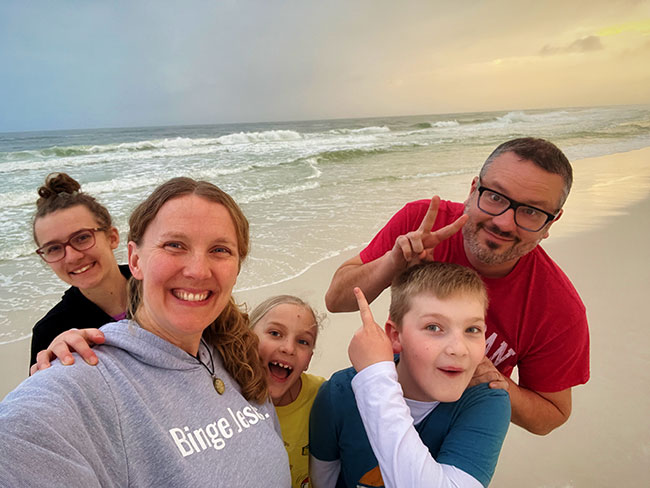
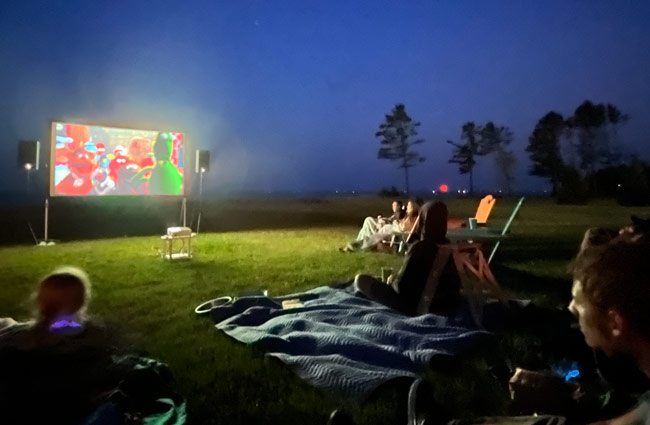
    Since moving to Sheboygan, we take off Fridays during the summer, designating them as “beach days.” After a few lazy hours spent on the edge of Lake Michigan, we return home, order pizza, and watch a movie. We all look forward to those days.

    What small things could you plug into your calendar that will give you something to look forward to? Perhaps a get-together with a friend you haven’t seen in a while. A surprise birthday party. A celebratory meal out. A day trip to a state park. Heck, our beloved Celebrate Everything calendar even gives you permission to make up your own holiday if you need to.

    Remember, anticipation is free happiness. 

    Want an easy way to keep Adultitis at bay?  

    Always have a vacation on your calendar and something to look forward to next week.

  • The Art of Letting Go

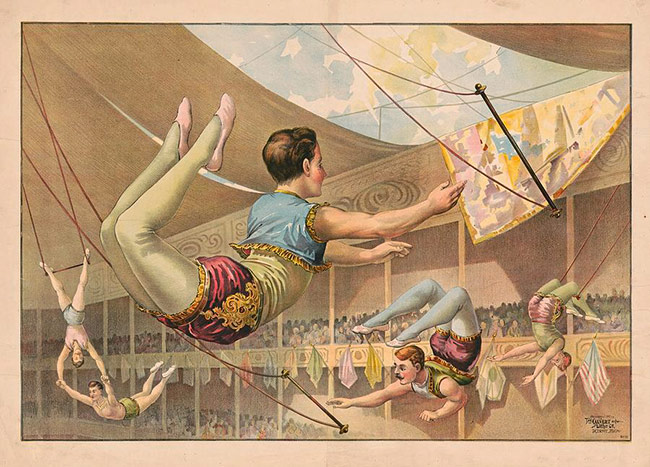
    He floats through the air with the greatest of ease
    The daring young man on the flying trapeze

    The greatest of ease, my foot.

    Before daring trapeze artists can float through the air, they have to master an important skill: letting go. It may look easy from the ground, but it’s anything but. 

    When it comes to flying from one trapeze to another, it turns out the letting go part is mandatory. It requires a leap of faith – in which, for a brief momen,t the person is not connected to anything or anyone – before they can move through their routine and delight the audience.

    In the circus known as Life, this is a skill we need to master as well.

    Over the past few months, I had a front-row seat to witnessing my father-in-law letting go. First, it was in the process of downsizing and moving to Sheboygan. It required saying goodbye to tools he’d no longer use and projects that would be left undone. Then, as he faced the prospect of his earthly life coming to a close, he went through the process of letting go of this life to embrace the next. It wasn’t with the greatest of ease, I assure you, but he handled it with grace and daring.

    Many of us will face this challenge at the end of our lives, but we all confront it throughout our lives as we transition from one season to another, from something safe to something uncertain.

    Graduation finds us leaving the comfort of school to enter the real world and our first job.

    Marriage finds us leaving the independence of singlehood to enter a shared life of sacrifice. 

    Retirement finds us leaving a predictable role and schedule for a wide-open calendar filled with unknowns.

    And sometimes we have to let go of a relationship or say goodbye to a sweet season in our life in order to fully enjoy the new season ahead.

    In my own journey, I occasionally experience feelings of resentment over the storm that ravaged our backyard last summer. I often feel angry that our woods are gone and that we’ve been saddled with an enormous bill that limits our freedom in other areas of our lives.

    But I have a choice. I can stew in my resentment and close myself off to what’s next, choosing to dwell on what was, even though there is nothing I can do to bring it back. Or, I can decide to reach for the next trapeze. And that requires a true letting go, a willingness to experience a brief time in which I am no longer attached to the past but not yet certain about what the future will hold.

    You can’t grab the gift that’s waiting for you if you’re still holding on to the empty box the last gift was in.

    Are you in a spot right now where you feel stuck, unsettled, or torn? 

    Maybe it’s time to let go of something so you can reach out and grab your next adventure.

    Don’t let the daring young man on the flying trapeze fool you. The process of letting go is scary, anxiety-inducing, and unsettling. 

    The art is in knowing that peace is found on the other side of your leap of faith.

  • When is Failure a Success?

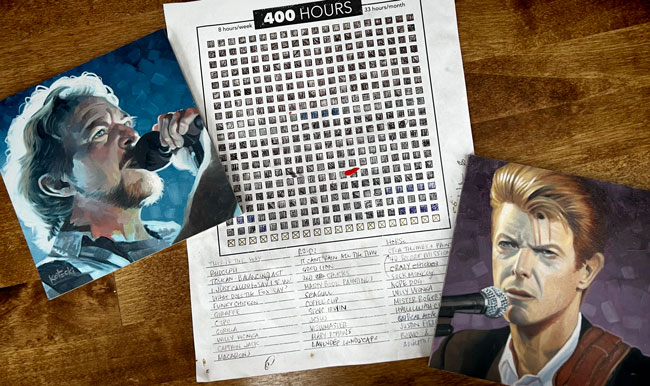
    400 hours…almost.

    At the beginning of 2022, I set a goal of achieving 400 studio hours. It was born out of a retreat I had a month earlier in which I felt God telling me to spend less time doing His job and more time doing mine. It was made clear to me that a big part of my job included making art. I figured an average of 8 hours a week was worthy of aiming for.

    After starting out of the gate strong, I hit a speed bump when we went on vacation to Florida at the end of January. Missing a whole week required me to squeeze in those eight hours elsewhere. It took me till the end of February to get caught up.

    Things went off the rails again in June, when a one-hundred-per-hour straight-line wind ripped through our backyard and upended our life for the next few months. In the meantime, we were busy preparing for our first out-of-state Escape Adulthood Summit, leading to another week out of the studio while in Utah.

    Despite the challenges, I kept chipping away, painting in the living room and at the kitchen table while my studio was being renovated. I was filling in boxes on my homemade chart, one by one, slowly but surely. 

    As we rolled into December, I could taste it. I was several weeks behind, but 400 was still doable. It would require some late nights and weekend effort, but it was possible.

    And then…I decided to let it go.

    It was not an easy decision, but something had to give. All three of our kids’ birthdays are between Thanksgiving and Christmas, and the addition of hosting a piano recital and the usual holiday preparations had me overwhelmed.

    The thought of giving up on 400 hours surfaced, but I didn’t want to give it any oxygen.

    Sure, the number itself was completely arbitrary. And yes, when I came up with it, I forgot to factor in simple things like taking vacations. In fact, I remember 380 hours feeling more realistic at the time, but it didn’t have the same ring to it as 400, so I went the route of an overachiever!

    All that said, I am no quitter. A lot of people knew I was working toward this goal. I didn’t want to publicly admit defeat, and I didn’t want to fall prey to the easy rationalizations we are so quick to conjure when we find the road harder than we expected.

    On the other hand, I was getting stressed out. I was worn down from a very difficult year. I wasn’t enjoying the family time because I saw it as a distraction from achieving my goal.

    Finally, I asked myself the most important question: Why?

    Why did I set this goal in the first place?

    The reason was simple: to make studio time a priority. To make sure I was making art. It’s my favorite thing to do, but easy to put off for more “urgent” things. (Pro tip: urgent things are rarely the most important things.)

    The thing is, it worked. I persisted amidst the distractions of the storm and the displacement of having no consistent place to work. I was prolific, creating more art than I’d made in years. But the hard truth was that somewhere along the line, I had made the goal a god. 

    The goal was no longer serving me; I was serving it.

    My intentions had become polluted. Achieving the goal was more about my pride. The process was poisoning my health, my relationships, and my love of art.

    And so, after much deliberation and prayer, I decided to forgo the final row on my scoreboard, crossing off the boxes in gold ink, designating them as an offering of sorts. 

    My pride took a hit, but my spirits lifted. It still required intentionality to reach 380, which I did on New Year’s Eve.

    So that’s it. That’s my confession, an admission of failure that I consider a success.

    Maybe there is a lesson here that is useful to you.

    I hope it’s not permission to give up too soon on something that matters to you, but perhaps an encouragement to give yourself grace, and peace to know it’s ok to pivot when plans change or you gain new information.

    More than anything else, it’s a reminder to keep that most valuable of questions –– why? –– at the ready. 

    Why did I set this goal?
    Why did I make this choice?
    Why did I start this thing in the first place?

    A question that starts with “why” is a great prescription for clarity.  

    And it helps keep us on the right track, making sure our goals serve us, not the other way around.

  • What Makes Someone an Artist?

    What makes an artist an artist?

    I was dubbed an artist as a kid, and I have held onto that label ever since. Back then, I operated under the assumption that artists were people who were good at drawing things. Eventually, I started to realize that artists came in many flavors. We could include painters, sculptors, fashion designers, photographers, poets, songwriters, musicians, actors, dancers…and the field grows. 

    Looking at the aforementioned list, one might be tempted to reframe an artist as anyone who does creative work. Which is fair. But doesn’t it require creativity to figure out a way to cure a rare form of cancer? Or to keep the doors open when the staff is short-handed? Or to feed a family of six on a shoestring budget?

    Now it’s getting tricky. 

    Perhaps, from a certain point of view, we are all artists, YOU included (yes, even if you’re not so hot at drawing things). If you are using your creativity to solve problems and make the world better – and by default, a little more beautiful – welcome aboard.

    Nailing down exactly WHO is an artist is a challenge. But I propose that an even more difficult task is believing you ARE one.

    My wife Kim is an artist, and she knows it. But it took her a long time to own it.

    I started noticing it some years ago when she began taking photos on her walks. She’d return with her heart full and a hop in her step, showing me the treasures she’d captured with her iPhone. They were interesting, different, and enthralling. “These are good!” I’d say, but my compliments fell on deaf ears for a very long time. Husbands are supposed to say nice things to their wives, after all.

    Her rebuttals were predictable: She wasn’t using a fancy camera. She had no training. She wasn’t doing it for money.

    Of course, some of the best artists were self-taught.

    The best tools have never been a requirement for making great art.

    Vincent Van Gogh – one of the greatest, most beloved artists of all time – only sold two paintings in his whole life.

    And I’m sorry, I don’t think you can look at these photos and NOT see art.

    Fortunately for all of us, Kim has come around to reality. She IS an artist. She notices things the rest of us don’t see and thankfully, uses her camera to capture the beauty for our benefit. While we impatiently wait for rainbows to show up on the horizon, she shows us wonder in a drop of dew, a heart-shaped hole in an old tree, and a delicate flower that maintains a fierce beauty even if it is a little past its prime.

    Meanwhile, she often uses words to knit those images together with deep truths that imbue us with inspiration, encouragement, gratitude, and hope.

    When we discussed the possibility of doing a book based on Kim’s photos, many people assumed it would be some sort of coffee table book: a glossy, straightforward collection of beautiful images. It could have been, and that would have been great. 

    But I’m happy to report it’s so much more. 

    Buy your copy of Wonderhunt

    In this gem, Kim shares the story behind her very first Wonderhunt, which came during a dark, lonely, overwhelming time in her life. It’s a story I know you can probably relate to, especially these days. She shares the amazing transformation that Wonderhunt ushered into her life, and gives you the tools to make Wonderhunt a life-giving part of your own. You’ll be drawn into a community of fellow Wonderhunters who are experiencing a magical brand of life together.

    There are exciting things on the horizon that I can’t wait to share with you,  and this book marks an important milestone and a new beginning. Our company, Escape Adulthood, is entering an exciting new era in which I am no longer the sole artist on the marquee. 

    And I, for one, couldn’t be happier.

    I am grateful to everyone who has purchased this book because your purchase proves what I’ve been saying all along: Kim’s point of view is unique, valuable, and something the world needs.

    Thanks to her, you will be awed. You’ll think. You’ll smile. You’ll laugh. You may even shed a tear or two. 

    Because that’s what the best art does.

  • Follow the Arrows

    In January of 2020, I was thisclose to giving up on my twenty-year dream of living in a lake home. Then the pandemic hit, making the decision all but irrelevant, considering the fact that I calculated that if we didn’t figure out an alternative revenue stream to speaking, we’d be bankrupt by November. Instead, that became the month we signed a contract to buy our dream house on Lake Michigan.

    How did we do that? 

    Well, my faith gives all the credit to God, who opened doors and led us every step of the way.

    All we did was follow arrows.

    The concept of following arrows comes from a book I read by Emily P. Freeman called The Next Right Thing. It was a metaphor that harmonized perfectly with the advice I’d been giving for years on tinkering.

    The premise is that sometimes in life, we’re looking for answers to our problems. But instead of answers, we get arrows. These arrows are the next steps on the journey.

    The problem is that we ignore the arrows, or even worse, let our logic get in the way and smother them with our own agenda. 

    Our job is NOT to wait for the entire plan to be revealed before we take our first step. 

    Our job is NOT to figure out five steps before we take the first. 

    Our job is to stop our frantic search for answers and follow the arrows instead.

    One. At. A. Time.

    In the process of sharing this concept with others, I’ve seen that some people misunderstand what this process looks like. They imagine an orderly progression of steps that make sense. Ha! It’s almost never like that, at least in my experience. It looks more like this:

    What “following the arrows” looks like.

    It’s haphazard and maddening, a path littered with false starts, dead ends, and wasted time.

    You usually can’t see more than one arrow at a time, and the steps are never as sexy or certain as we’d like them to be.

    I’ve told the story of how following arrows led us to our dream home in my short film, Here Comes the Sun. At one point in our journey, we followed an arrow that led us to visit wooded lots with intentions to build. We traipsed through brush and fields with our realtor, eventually realizing that building our dream home wasn’t the right option for us. It seemed like a dead end.

    But that assessment is what led us to the next arrow: visiting a Parade of Homes. There, we met a contractor, someone we had the feeling we were supposed to know.

    Eventually, our search led us to the perfect house, and we put in our best offer. We didn’t get it. Another dead end, or so it seemed.

    We kept following arrows, looking at other homes, and came upon one that seemed right, but was more expensive. It required us to get more creative with finances, and Kim’s parents offered to float us a loan. 

    We put in an offer. We didn’t get it. (What the heck, arrows?!) 

    A month later, out of nowhere, the original house came back on the market, and we were able to get it for a better price. The extra money from Kim’s parents became the seed money we needed to build out my art studio. 

    When it came to that point, we reached out to the contractor we met at the Parade of Homes to bid on the renovation. He took forever, and when we finally received it, it was way more expensive than we could afford. 

    That led us to consider another guy we hired to install light fixtures, who we later discovered also did contracting. Chad has been a Godsend, and the process of working together has connected us with many people who have helped our family in various ways. 

    This is just a snapshot of our story. I skipped a few arrows for the sake of brevity, but in reality, the formidable path stretched across two decades. It remains a good example of how the process of following arrows is rarely neat and orderly. It only looks that way in retrospect, because with the power of hindsight, we can see how it all worked together — all the twists and turns and dead ends — in a way that served a purpose.

    But in the middle of it, it’s a hot mess. It’s slow, then fast, then slow again, offering up a sharp left turn where you ram into what appears to be a brick wall. But it’s there another arrow is revealed, an arrow you never would have found had you not made it to the brick wall in the first place. 

    It requires humility to take what feels like a small, inconsequential step when you’re tempted to wait for a seemingly more significant, more productive one.

    It requires discipline to keep reminding yourself that you only have to look for and take the next arrow, not the next ten, or five, or two. 

    It requires courage to follow the clear arrow in front of you when the next one after that is nowhere to be seen. 

    It requires persistence to keep going when you are discouraged by the brick walls.

    And it requires faith that the path will eventually make sense, and that the twists and turns and detours all serve a purpose.

    Maybe you are in the middle of a dense forest right now, hemmed in by thorny thicket and brambles. Maybe you’re in the middle of a barren desert, with no answers in sight.

    It’s ok. Follow the arrows instead.

    God won’t let you miss your future.